
Fitness Guide
Train before the
mountain trains you.
Your body is going to be your most important piece of kit on the hill. This guide tells you exactly what to build, how to build it, and why it matters when you're chasing your ski or snowboard instructor qualification.
Build V5.5
Why We Built This
Our gap year market is our bread and butter, and we know that on a gap year you mostly just want to have fun. We get that! But what we really excel at is careers in the winter sports industry, and if you're coming to us to build a career and a lifestyle out of this, not just a season, you need to take getting fit before you arrive more seriously.
Our instructors will throw everything they've got at you. The fitter you are and the more stamina you have, the more of that training you can actually absorb, day after day. You're investing a lot of money in what will be a profound few weeks of your life. It's only fair your body doesn't let you down.
Whether you're joining us for a nine-week gap course, a full internship, training to become a ski patroller, or going for your Level 3, this programme is built to make you bulletproof in the areas that matter. Forget the vanity workouts, you can build a beach body another time. This is for something else entirely. You're embarking on a winter training programme, not a holiday. If you wanted a holiday, grab a book and sit on a beach. Otherwise, give yourself plenty of time, commit properly, and start investing in yourself now, not tomorrow.
Good luck, and we'll see you on the slopes!
Rik Dyson
From the director
What we hear
The Same Things, Every Season.
Paraphrased from interns and course candidates over the years, names left off. We hear these often enough that we stopped treating them as one-offs and built this plan instead.
My legs feel like they belong to somebody else.
I didn't realise it was going to be this much fun or this hard on my body.
I don't want a day off, but I need a day off.
Can someone bring me my dinner down? I can't get off the couch.
I've had three dinners and a protein shake. Still starving.
I'm taking my pillow to the hot tubs. I'll see you there.
Day four and I'm walking down stairs backwards.
I thought I was fit. I was fit for something else.
Nobody warned me my quads could ache in their sleep.
This is not beach-body training
If your gym history is upper body and aesthetics, chest, shoulders and arms, this is the hardest switch to make and it catches plenty of people out. Legs, glutes and core are unglamorous, you will not see much of the work in the mirror, and none of it will impress anybody in a t-shirt. It is also the only training that holds up on day five of a course.
Anyone who already trains legs, glutes and core has a head start here, whatever brought them to it. If that is not you, expect the first fortnight to feel like starting again, because in the muscles that matter on snow, you are.
Medical disclaimer
This guide is for educational purposes only. Consult your GP or physio before starting any new training programme, particularly if you have existing injuries or health conditions.
This is ski-specific fitness
We're not training you for a marathon or the gym floor. Every exercise in this guide exists because it makes you a better, safer, more resilient skier or snowboarder.
Start at least 8 weeks out
The plan works best with an 8-week runway before your course starts. Got more time? Run it twice. Got less? Focus on weeks 5–8 and supplement with daily walks and squats.
How this guide works
Five steps. Start to finish.
What to actually do with this page, in order.
1
Fill out the questionnaire
Four quick questions below tailor the exercises, sets and swaps to you, discipline, fitness level and age all factor in.
2
Set your sessions
Pick two to four workout slots a week that actually fit your life. Two or fewer a week isn't enough to get you where you need to be before you come out.
3
Gather your kit
Whatever the plan calls for, at home or in the gym, sort it before week one so it's not the reason you skip a session.
4
Learn the exercises
Run through the exercise library and watch the form videos before you load anything heavy. Five minutes now saves an injury later.
5
Get started
Week one is below. Log your self-test scores now so you've got something to compare against in week eight.
What you're building
Four pillars. One mountain-ready body.
Ski and snowboard fitness isn't about being a gym hero. It's about four things working together.
1
Leg strength
Quads, hamstrings and glutes absorb every turn. Build them wrong and fatigue sets in by run three. Build them right and you'll still be carving on day fourteen.
2
Core stability
Not six-pack abs. Deep core. The kind that keeps your spine neutral when you're hit by a bump, an ice patch, or a nervous student skiing straight at you.
3
Cardio capacity
At altitude your lungs work harder and your recovery takes longer. Build your aerobic base now so altitude is just scenery, not a handicap.
4
Mobility & balance
Flexibility in your hips and ankles, proprioception in your feet. The difference between catching a fall and becoming it.
Skis or board?
One strength base. Two sets of demands.
The engine is the same for both. Where you put the finishing emphasis is not. Your tailored plan adjusts automatically, but here is the honest difference.
Skiing
Independent legs, so single-leg strength and balance matter most. Eccentric quad control holds your edge through the turn, and calf and ankle drive keep you forward in the boot. Poling and terrain absorption ask a bit more of the upper body.
Snowboarding
Both feet locked to one board, so it leans on rotational core (Pallof, Russian twists) for heel-to-toe control, strong glutes and hamstrings to hold the low riding stance, and wrist, hip and impact conditioning for the falls that come with learning.
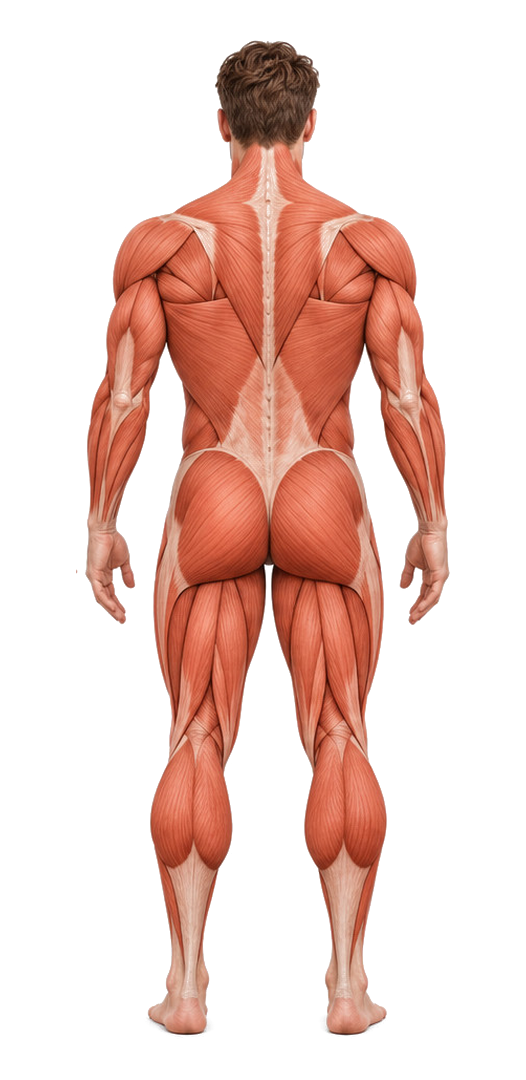
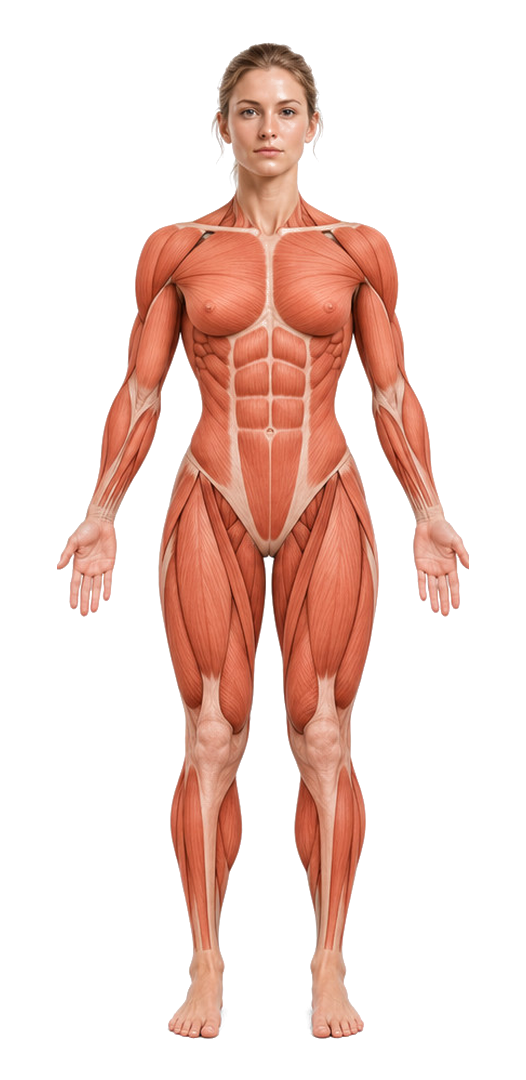
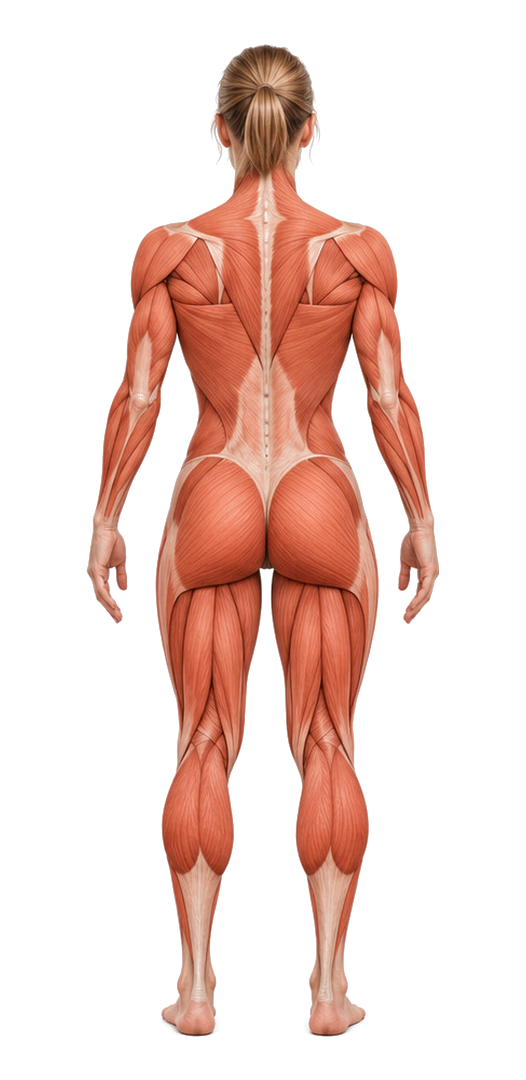
Interactive muscle map
Know what you're training and why.
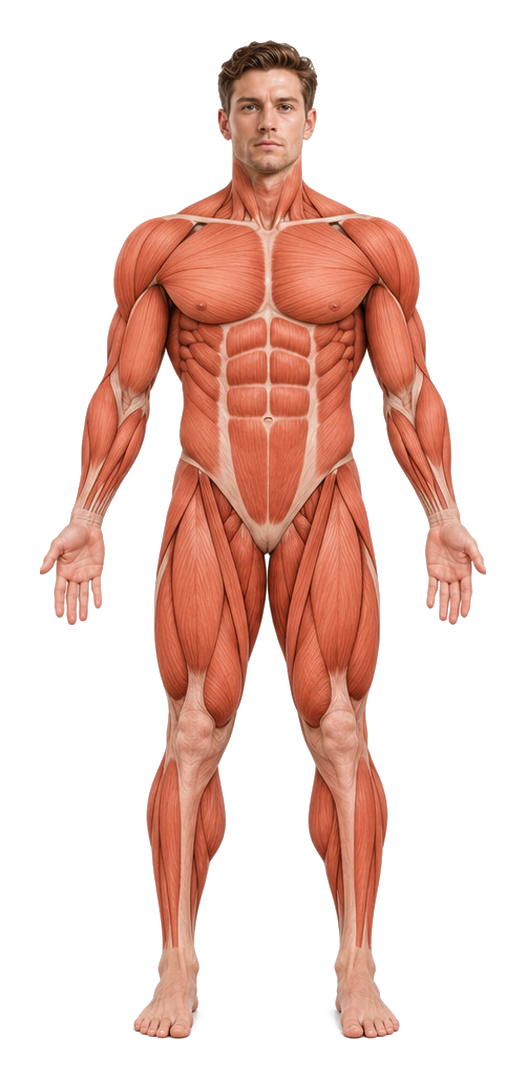
Tap a muscle group to see which exercises target it and why it matters on the mountain.
👆
Tap a muscle group on either figure to see what it does on the mountain and which exercises build it.
Tap a marker for detail
Selected muscle
The science bit
Why this programme works.
Evidence-based principles translated into something you can actually use on a mountain.
6 up, 2 down
Build then taper
Six weeks of climbing load, two weeks of coming back down. Load rises a set at a time rather than in jumps, because the injury that wipes out your season almost always follows a week you added too much at once.
3–5×
Sets per movement
Three sets in weeks one and two, four from week three, five on the main lifts in week six. Then it comes back down: three sets in week seven, two in the final week. Volume drives the adaptation, but only if you arrive fresh.
RPE 7
Target effort level
Rate of Perceived Exertion 7 means 3 reps left in the tank. Not max effort, not a stroll, controlled hard work with form intact throughout.
SAID
Specific Adaptation to Imposed Demands
Your body adapts to exactly what you train. That's why we use single-leg exercises, rotational movements, and eccentric loading, because that's what skiing demands.
70°
Knee flexion angle
The athletic ski stance sits between 60° and 80° knee flexion. Our Bulgarian splits and step-ups train that range under load. Wall sits go deeper, nearer 90°, on purpose: holding below your working angle builds the tolerance for the runs where your legs stop cooperating.
1 leg
Unilateral priority
Skiing is a series of single-leg pressure shifts. Training bilaterally (two legs) misses this. By week six half the movements in the plan load one leg at a time: skater bounds, step-ups with knee drive, single-leg RDL, bird-dog.
Zone 2
Aerobic base building
The aerobic system fuels recovery between runs and between days. We build it with steady-state cardio at a pace where you can hold a conversation, 60–70% max heart rate.
2min / 40s
HIIT protocol
Two minutes of work, 40 seconds of rest, five exercises back to back. That is a long work interval by gym standards, and deliberately so: a ski run lasts minutes, not seconds. The lift is your rest.
2,000m+
Altitude consideration
Our Canadian resorts sit above 2,000m, though you will spend most of your day lower than the top station. Aerobic power falls steadily with altitude, so the same effort costs more up top. (Wehrlin & Hallén, 2006) We build the buffer before you fly.
8hrs
Sleep as training
Muscle protein synthesis peaks during deep sleep. Athletes who regularly sleep under 8 hours carry around 1.7× the injury risk, and short sleep blunts recovery and strength gains. (Milewski et al., 2014) Non-negotiable.
48hrs
Muscle recovery window
Heavy leg sessions take 48 hours to recover. Our plan alternates between leg-dominant and upper/core days. This isn't rest, it's programming intelligence.
~20g
Post-session protein
Around 20g of quality protein (roughly 3 eggs or a 150g chicken breast) after training maximises muscle protein synthesis. (Moore et al., 2009) The window is wider than once thought, so within a couple of hours is fine. It doesn't need to be a shake.
The evidence
- Milewski MD et al. (2014). Chronic lack of sleep is associated with increased sports injuries in adolescent athletes. J Pediatr Orthop. PubMed
- Moore DR et al. (2009). Ingested protein dose response of muscle and albumin protein synthesis after resistance exercise. Am J Clin Nutr. PubMed
- Wehrlin JP & Hallén J (2006). Linear decrease in VO₂max and performance with increasing altitude in endurance athletes. Eur J Appl Physiol. PubMed
- Gabbett TJ (2016). The training-injury prevention paradox: should athletes be training smarter and harder? Br J Sports Med. PubMed
- Borg GA (1982). Psychophysical bases of perceived exertion. Med Sci Sports Exerc. PubMed
- Schoenfeld BJ et al. (2016). Effects of resistance training frequency on measures of muscle hypertrophy: a systematic review and meta-analysis. Sports Med. PubMed
Core training principles (progressive overload, RPE, energy systems) follow NSCA and ACSM guidance. This guide is educational and is not a substitute for individual medical advice.
Start here
Answer four quick questions.
Everything below, the plan, the exercises, the swaps, adjusts to your answers. Takes about a minute.
🎯
Built around you, not a generic template.
Skier or boarder. New to training or in the gym every week. Under 30 or over 50. This isn't the same plan for everyone, the exercises, sets and swaps adjust automatically to what you tell us below.
Step 1 of 6
How much do you train right now?
This sets your starting volume.
Every session starts here
The warm-up is not optional.
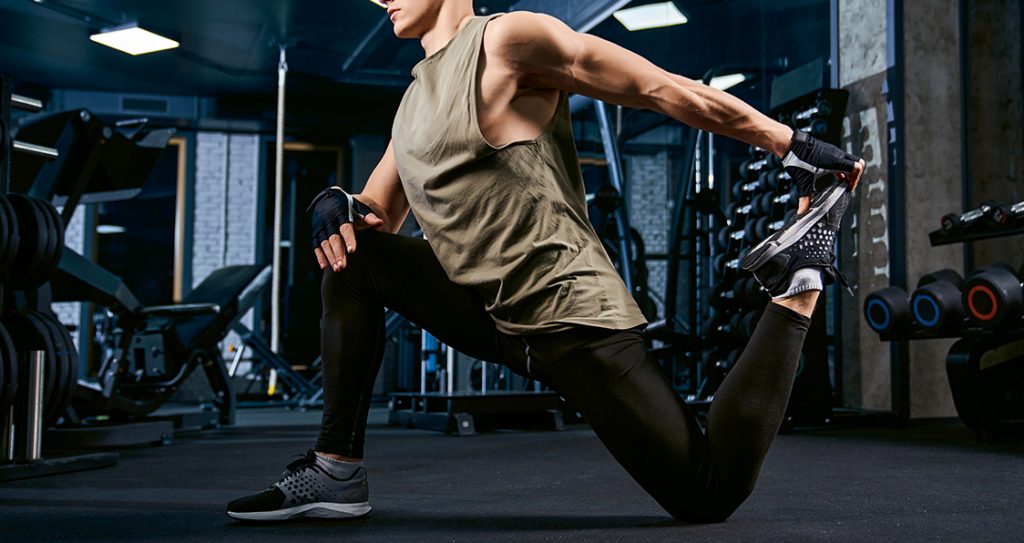
Cold muscles tear. A proper warm-up raises core temperature, activates key muscle groups, and primes your nervous system. It takes 12 minutes. Do it every time.
Phase 1: Raise Temperature
Light cardio to get the blood moving. Fast walk, jog, or cycling. You should feel warm but not out of breath by the end of this phase.
3 minutesPhase 2: Joint Circles & Mobilisation
Hip circles, ankle rolls, thoracic rotations, and leg swings. Lubricate the joints that skiing hammers, hips, knees, and ankles, before you load them.
4 minutesPhase 3: Dynamic Activation
Glute bridges, banded clamshells, and jump squats at 50% effort. Wake up the stabilisers and prime the neural pathways before heavy loading begins.
5 minutes
Your scoreboard
Test yourself. Then prove it.
Do these four before week 1, then again on your final week. Numbers do not lie, and watching them climb is the best motivation there is. Your scores save to this device.
Wall sit hold
Back flat on a wall, knees at 90°. Time how long you can hold it.
seconds
seconds
—
Bodyweight squats to failure
As many full-depth squats as you can manage before you give in. No clock, good form only, stop when the form goes.
reps
reps
—
Single-leg balance
Eyes closed, hands on hips, standing knee softly bent, not locked. Time your best side.
seconds
seconds
—
Plank hold
Forearms down, hips level, no sagging. Time until form breaks.
seconds
seconds
—
Log your week 1 numbers now. We’ll keep them safe until your final week.
The programme
8 weeks. Built to peak on arrival.
Week one is not easy. Week eight is a different human. Weeks 1 and 2 are open below, tailored to the answers you gave above.
Do
- Warm up for the full 12 minutes, every session, no exceptions
- Stop a set the moment form breaks down, quality over reps
- Rest the full time between sets and sessions, especially in week 1–2
Don't
- Skip the warm-up to save five minutes
- Push through sharp or joint pain, dull muscle fatigue is fine, pain is not
- Jump straight to the top of a rep range on day one
1
Week 1 · Foundation
Get moving. Build the habit.
▼
Monday
Leg strength A
Option BMinimal kit
Bands and one pair of kettlebells
Wednesday
Core + upper
Option BMinimal kit
Bands and one pair of kettlebells
2
Week 2 · Foundation
Add load. Find your edge.
▼
Monday
Leg strength B
Intern defaultFull gym
Option BMinimal kit
Bands and one pair of kettlebells
Wednesday
HIIT A
Intern defaultFull gym
Protocol A × 2 rounds. Warm-up + cool-down included. Record your rounds.
Option BMinimal kit
Bands and one pair of kettlebells
Protocol A × 2 rounds. Warm-up + cool-down included. Record your rounds.
Option CBodyweight only
You and the floor
Protocol A × 2 rounds. Warm-up + cool-down included. Record your rounds.
Saturday
Full body + core
Option BMinimal kit
Bands and one pair of kettlebells
3
Week 3 · Build
Volume goes up. Rest stays sacred.
▼
Monday
Leg strength A+
Option BMinimal kit
Bands and one pair of kettlebells
Wednesday
Core + upper +
Option BMinimal kit
Bands and one pair of kettlebells
Friday
HIIT A
Intern defaultFull gym
Protocol A × 3 rounds, back to back
Option BMinimal kit
Bands and one pair of kettlebells
Protocol A × 3 rounds, back to back
Option CBodyweight only
You and the floor
Protocol A × 3 rounds, back to back
Sunday
Zone 2 cardio
Intern defaultFull gym
40 min steady-state. Brisk walk / cycle / row at conversational pace.
Option BMinimal kit
Bands and one pair of kettlebells
40 min steady-state. Brisk walk / cycle / row at conversational pace.
Option CBodyweight only
You and the floor
40 min steady-state. Brisk walk / cycle / row at conversational pace.
4
Week 4 · Build
Introduce power. Start sweating.
▼
Monday
Power legs
Intern defaultFull gym
Option BMinimal kit
Bands and one pair of kettlebells
Wednesday
HIIT B + core
Option BMinimal kit
Bands and one pair of kettlebells
Friday
Strength full body
Intern defaultFull gym
Option BMinimal kit
Bands and one pair of kettlebells
Sunday
Zone 2 + mobility
Option BMinimal kit
Bands and one pair of kettlebells
5
Week 5 · Intensity
Feeling it? Good. Keep going.
▼
Monday
Heavy legs
Intern defaultFull gym
Option BMinimal kit
Bands and one pair of kettlebells
Wednesday
HIIT max effort
Intern defaultFull gym
Protocol A × 3 rounds. This should be hard.
Option BMinimal kit
Bands and one pair of kettlebells
Protocol A × 3 rounds. This should be hard.
Option CBodyweight only
You and the floor
Protocol A × 3 rounds. This should be hard.
Thursday
Active recovery
Intern defaultFull gym
30 min walk or easy cycle. Foam roll quads, hamstrings
Option BMinimal kit
Bands and one pair of kettlebells
30 min walk or easy cycle. Foam roll quads, hamstrings
Option CBodyweight only
You and the floor
30 min walk or easy cycle. Foam roll quads, hamstrings
Saturday
Upper + core
Option BMinimal kit
Bands and one pair of kettlebells
6
Week 6 · Intensity
Peak volume week.
▼
Monday
Power legs
Intern defaultFull gym
Option BMinimal kit
Bands and one pair of kettlebells
Wednesday
HIIT A × 3
Intern defaultFull gym
Three rounds, back to back. Every rep counts. Push the quality
Option BMinimal kit
Bands and one pair of kettlebells
Three rounds, back to back. Every rep counts. Push the quality
Option CBodyweight only
You and the floor
Three rounds, back to back. Every rep counts. Push the quality
Friday
Strength full body
Option BMinimal kit
Bands and one pair of kettlebells
Sunday
Zone 2 × 60 min
Intern defaultFull gym
Longest Zone 2 session of the programme. Go steady
you earned a long one.
Option BMinimal kit
Bands and one pair of kettlebells
Longest Zone 2 session of the programme. Go steady
you earned a long one.
Option CBodyweight only
You and the floor
Longest Zone 2 session of the programme. Go steady
you earned a long one.
7
Week 7 · Sharpen
Reduce volume. Increase quality.
▼
Monday
Leg speed
Option BMinimal kit
Bands and one pair of kettlebells
Wednesday
HIIT A × 2
Intern defaultFull gym
Two high-quality rounds. Perfect form over max effort.
Option BMinimal kit
Bands and one pair of kettlebells
Two high-quality rounds. Perfect form over max effort.
Option CBodyweight only
You and the floor
Two high-quality rounds. Perfect form over max effort.
Saturday
Mobility + activation
Intern defaultFull gym
Option BMinimal kit
Bands and one pair of kettlebells
8
Final Week · Peak
You're ready. Stay sharp.
▼
Monday
Light legs
Option BMinimal kit
Bands and one pair of kettlebells
Wednesday
HIIT A × 1
Intern defaultFull gym
One sharp round. Just to keep the engine warm. No more.
Option BMinimal kit
Bands and one pair of kettlebells
One sharp round. Just to keep the engine warm. No more.
Option CBodyweight only
You and the floor
One sharp round. Just to keep the engine warm. No more.
Showing the intern default. Until you answer the questionnaire, every session above is set for our most common candidate: 18 to 30, training on and off, skiing, with gym or home access. Options B and C under each session cover minimal kit and bodyweight only.
Answer six questions and the recommended version switches to whichever suits your kit, your age and your current training.
High-Intensity Interval Training
Your cardio, done right.
Replicate the on-off demand of a real ski run. Hard effort for a run, brief recovery on the lift, repeat until your legs are cooked and your lungs are stronger for it.
Work hard, then rest for exactly as long as you worked. It sounds generous until you are three exercises in. Admittedly, we would all love a lift that got us back to the top in 30 seconds flat. Let's face it, it doesn't happen. In here it does, and whichever setting you pick, the rest is never quite enough. Knuckle down.
Protocol A: Ski HIIT
Squat jumps
Skater bounds
Mountain climbers
High knees
Plank shoulder taps
No equipment needed. Pick your work interval and you get the same again as rest, then move straight to the next exercise. One round = all 5 exercises, back to back. Start at 30 seconds if you are new to this. Three rounds is the ceiling, not the target.
Interactive HIIT timer
60
WORK
Squat jumps
Round 1 of 2 · Exercise 1 / 5
60 seconds work, 60 seconds rest
Protocol B: Endurance base
Run, cycle, row, or ski erg. Heart rate 60–70% of max. You should be able to speak a sentence but not hold a full conversation. Do this twice per week in addition to your HIIT sessions, not instead of them.
Find your actual zone
If you have a watch with a wrist heart-rate sensor, or better still a chest strap, use it. Chest straps are more accurate at steady efforts and they are not expensive. Most watches will report your zones directly; if yours does not, 60–70% of your maximum heart rate is close enough to work with. The talk test is the backup, not the gold standard: if you are gasping, you have drifted out of Zone 2 and into a harder session that will cost you tomorrow.
Why this matters more than it looks
Zone 2 is the least exciting training in this guide and the most underrated. Nothing about it feels productive. There is no burn, no soreness the next day, no sense of having emptied the tank. Endurance athletes still build the bulk of their year on it, because it is what raises the ceiling everything else operates under.
Be honest about the timescale, though. The adaptations are slow and undramatic and you will not feel different after two sessions, or ten. It takes months rather than weeks, which is exactly why most people skip it in favour of something that feels harder. Over eight weeks you will build a base, not a finished engine. That base is what decides whether you are still skiing well at four o'clock on day five, or sitting in the bar because your legs and lungs gave up at lunchtime.
How this fits the 8-week plan
- Protocol A and Protocol B are the two cardio tools, not sessions on their own. They only happen when a day in the 8-week plan above tells you to.
- Look for "HIIT A" in a week's sessions, that's Protocol A, at the rounds stated (2 rounds in week 2, 3 rounds from week 3 through week 6, then 2 in week 7 and a single round in the final week).
- Look for "Zone 2 cardio", that's Protocol B, run at whatever duration that week specifies.
- Everything else in a week (leg strength, core, upper body) is separate resistance work, not part of either protocol.
What a month actually looks like
Pick a frequency to see how Protocol A (HIIT), Protocol B (Zone 2) and your strength days slot into a real month. No dates, just the pattern.
A solid working minimum. One strength day, one HIIT day, one Zone 2 day, spaced with rest between.
Mon
Tue
Wed
Thu
Fri
Sat
Sun
StrengthS
RestR
HIIT AHIIT
RestR
Zone 2Zone
RestR
RestR
HIIT AHIIT
RestR
StrengthS
RestR
Zone 2Zone
RestR
RestR
StrengthS
RestR
HIIT AHIIT
RestR
Zone 2Zone
RestR
RestR
HIIT AHIIT
RestR
StrengthS
RestR
Zone 2Zone
RestR
RestR
HIIT A (Protocol A)
Zone 2 (Protocol B)
Strength
Rest
Scaling up isn't just adding more of everything. Going from 3 to 4 days adds a second strength day. Going to 5 adds a third. HIIT and Zone 2 stay capped at one session each a week regardless of frequency, that's the recovery ceiling, not a typo. More strength volume, not more high-intensity work, is how you safely add days.
Getting fit is half of it.
The other half is the qualification. If you are training for a reason, let's talk about the course that gets you there.
Exercise library
Every Move. Explained Properly.
Twenty-five exercises, filterable by muscle group. Each one explains what it works, why it matters on snow, and links to a form video worth trusting. It lives on its own page so this one stays quick to load.

Nutrition basics
Fuel the work. Recover from it.
We're not here to prescribe a diet. We're here to give you three rules that will make a noticeable difference to your training and your time on the hill.
Pre-training
Prime the engine
Eat a carbohydrate and protein meal 1.5–2 hours before training. You need glycogen to perform. Training fasted creates a different stimulus, good for endurance days, not ideal for strength work.
Porridge + eggs
Rice + chicken
Toast + peanut butter
Post-training
Rebuild the muscle
Within 60 minutes of finishing: 20–30g protein and fast-digesting carbohydrates. This is the window where your muscles are most receptive to rebuilding. Don't skip it out of laziness.
Greek yoghurt + banana
Protein shake + milk
Tuna + white rice
On the mountain
Don't run out of fuel at lunch
On-snow training days burn 600–900 kcal per hour at instructor pace. Eat at breakfast, snack by mid-morning, eat a proper lunch, and carry something in your pocket. Dehydration at altitude hits fast and hard.
Nuts + dried fruit
Energy bar
2L water minimum
From the WSC blog
Keep reading.

Nutrition
Snow-ready nutrition
What to eat before and during the season to actually perform on the hill.
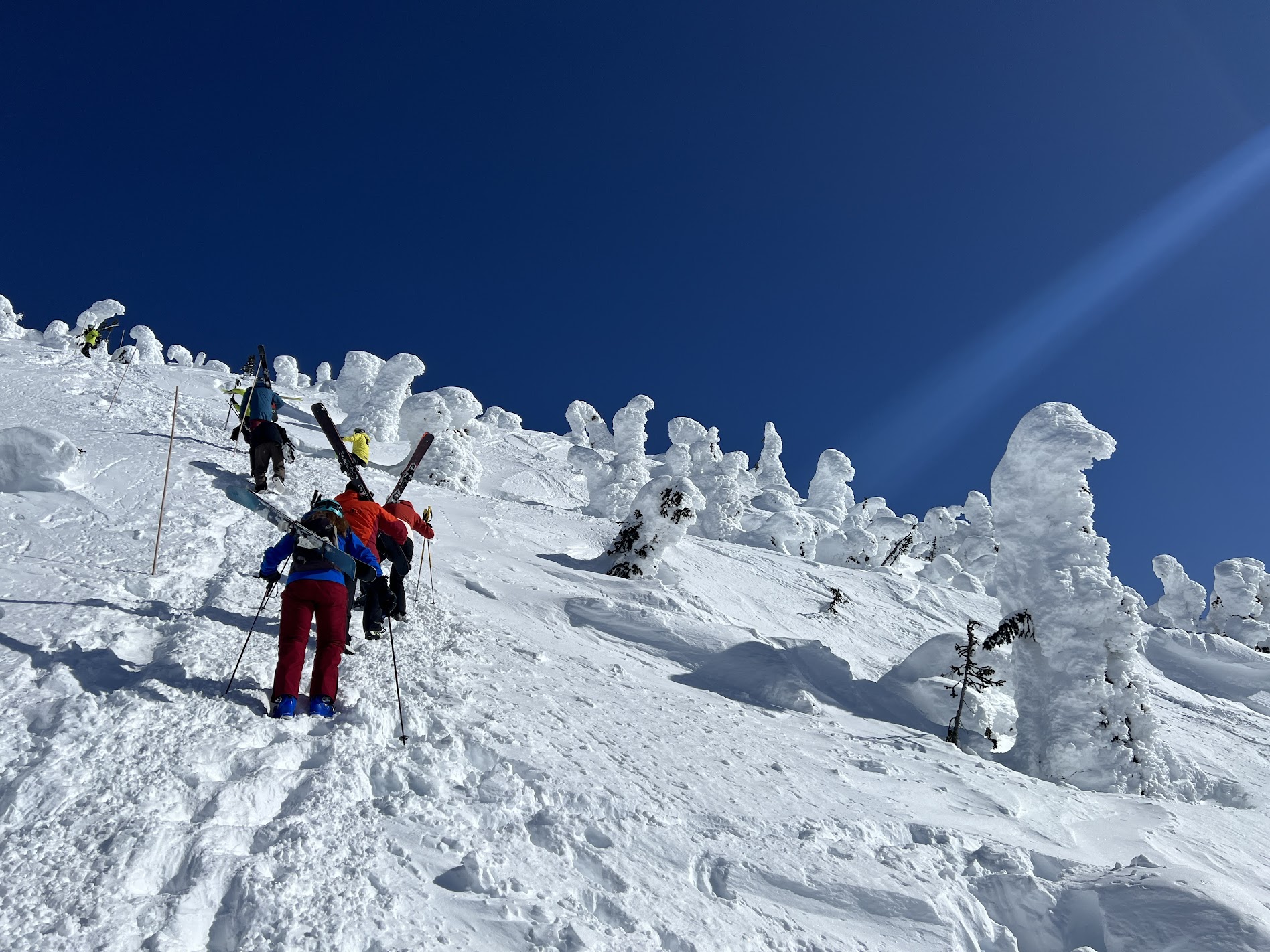
Life on the hill
Getting the most out of your season
How to make the most of your time on the mountain, from someone who's done it.
Courses
Ski instructor courses
Browse every ski instructor course we run, by resort and by level.
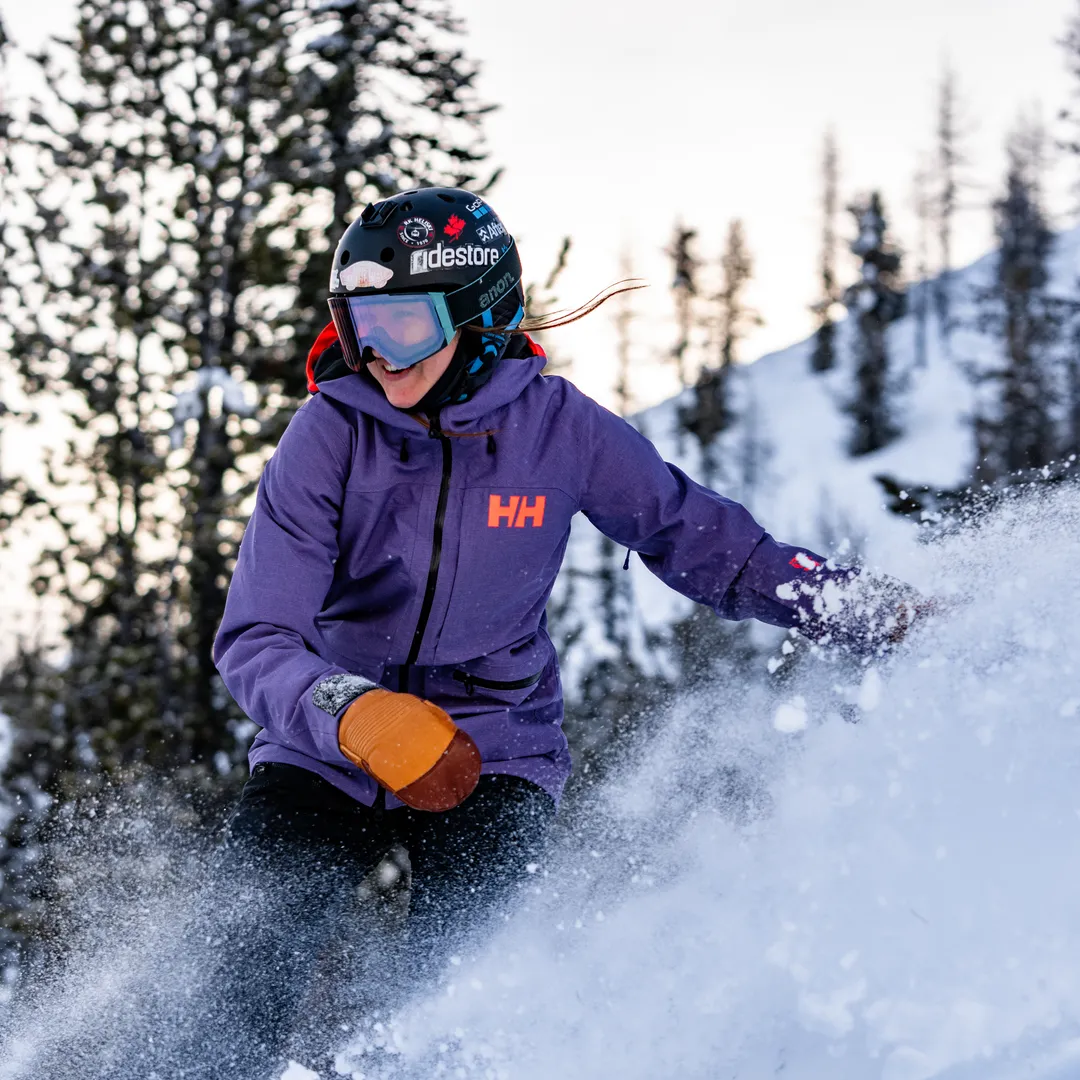
Courses
Snowboard instructor courses
Browse every snowboard instructor course we run, by resort and by level.

Recovery
Ski season prep: fine-tune, recover and feel ready
Abbie Morris's own guide to arriving primed and staying injury-free all season, from AM Sports Therapy.
Common questions
Before you start training.
How fit do you need to be for a ski or snowboard instructor course?
You don't need to be an athlete, but instructor courses are physically demanding: full days on snow, back to back, for weeks. The stronger your legs, core and aerobic base before you arrive, the faster you improve and the lower your injury risk. This plan builds exactly that in eight weeks.
How long before my course should I start training?
Ideally eight weeks. That is enough time to build real leg strength and an aerobic base without rushing it. Got more time? Run the plan twice. Less than four weeks? Focus on weeks 5 to 8 plus daily walks and bodyweight squats.
Can I get ready without a gym?
Yes. Take the quiz and choose bodyweight or home kit, and every gym exercise shows a swap you can do with a backpack, a step and a resistance band. All you truly need to start is your bodyweight, a wall and a step.
Is this plan good for snowboarders too?
Yes. The strength base is the same for both sports. Skiers get more single-leg and edge-pressure emphasis; snowboarders get more rotational core, glute and impact work. Your tailored plan adjusts the emphasis automatically once you take the quiz.
Will this help me avoid injury on my course?
It is built to. Strong quads, hamstrings and glutes protect the knee, a stable core protects the back, and good sleep and fuelling support recovery. It cannot remove all risk, so always warm up first and build your training load gradually.
What if I miss a week or fall behind?
Pick up where you left off, don't try to cram missed weeks into one. If you missed more than two weeks, repeat the week you're on rather than jumping ahead, your body needs the progression in order to actually adapt.
Do the exercises really differ for men and women?
Only where it genuinely matters, like the push-up starting position. Everything else is the same movement for everyone. Progression is based on how an exercise feels to you, not your sex or age, so swap up or down whenever you're ready.
I'm over 50, is this plan safe for me?
Yes, with the adjustments the quiz already makes: lower-impact swaps for jumps and plyometrics, and a stronger push on mobility work. It is not medical advice though, so check with your GP first if you have an existing joint, heart or back condition.
How sore should I actually expect to be?
Sore in the muscle, not sore in the joint. Expect stiffness for a day or two after a new exercise, especially the Nordic curl and wall sit. Sharp pain, swelling or pain that gets worse, not better, over 48 hours is not normal, stop and get it looked at.
Does the plan actually change based on my quiz answers, or is it the same for everyone?
It genuinely changes: sets, reps and exercise swaps adjust to your sport, training level and age group, and the push-up variant adjusts to sex. It is not a marketing line, the underlying exercise selection is different for a 22-year-old gym regular than for a 55-year-old starting from scratch.
Is my progress actually saved, or do I lose it if I close the page?
It's saved in your browser on this device, so closing the tab and coming back is fine. It is not saved to an account, so a different browser, a different device, or clearing your browser data will lose it. Don't rely on it as your only record if that matters to you.
What does this actually cost?
Nothing for weeks 1 and 2. Weeks 3 to 8 currently unlock the same way, free, once you've given us your email so we can send you the link. That may change once the plan sits behind full membership access on the new site, we'll be upfront if it does.
Do I need any equipment at all?
No. Every gym-based exercise has a genuine bodyweight or household swap listed with it. It will be slower to build strength than with real weights, but it is not a barrier to starting.
Can I do this alongside another gym programme I'm already running?
Not really, not without cutting volume somewhere. Running two full leg-and-core programmes in the same week is how people get hurt or burn out before they even reach their course. If you're already training seriously, use this to check your gaps rather than stacking it on top.
From the hill
They trained. Then they passed.
★★★★★
I wasn't very tired. Thanks to the work I put in to get fit before I went, the biggest problem I had was breaking in new boots.
★★★★★
I actually found their guide really useful, it definitely focuses more on what the mountain needs than what the mirror wants. Which I'll admit takes a little alteration to my usual routine, but it paid off.
★★★★★
Well structured and worth it, but start earlier than you think and don't skip leg day!
You'll be fit. Make it count.
This plan gets you to the mountain ready. Our ski and snowboard instructor courses get you home qualified and employable. The next group is forming now.
Not ready to commit? Reply to any email from us with a question. A real human answers.
WSC Fitness Guide - build v55
As Seen In...


 Emma
 Rik
 Rik
 Emma
 Rob
 Iain
 Cass
 Mike
 Abbie