
Choosing a resort
The Resort Comparison Guide.
Six very different resorts and six very different winters. Terrain, snow, town life, training culture and who each one actually suits, so you can pick with your eyes open rather than by the prettiest photo.
Inside
1 Why there is no best resort
2 Each resort: terrain, town and who it suits
3 Resort village or real town
4 So, which one?
5 The big four and the boutique trio
6 Still torn between two?

There Is No Best Resort.
There is only the one that fits the winter you actually want. Someone chasing deep powder and someone chasing a lively social scene should not end up in the same place, and picking on reputation alone is how that happens.
We run Level 1 and Level 2 courses at all four of the big resorts, Revelstoke included. The one thing to be clear about is the internships: at Revelstoke the only internship we run is the Level 3, so as an internship it is a second-season option rather than a first winter. The terrain backs that up, since it is more serious and rewards someone with a bit of mileage behind them. All of the internship and course detail lives in our other guides; this one is purely about the mountain and the town. If you are not sure where your skiing or riding currently sits, start with the ski ability guide or the snowboard ability guide, then come back to this.
Why people actually come
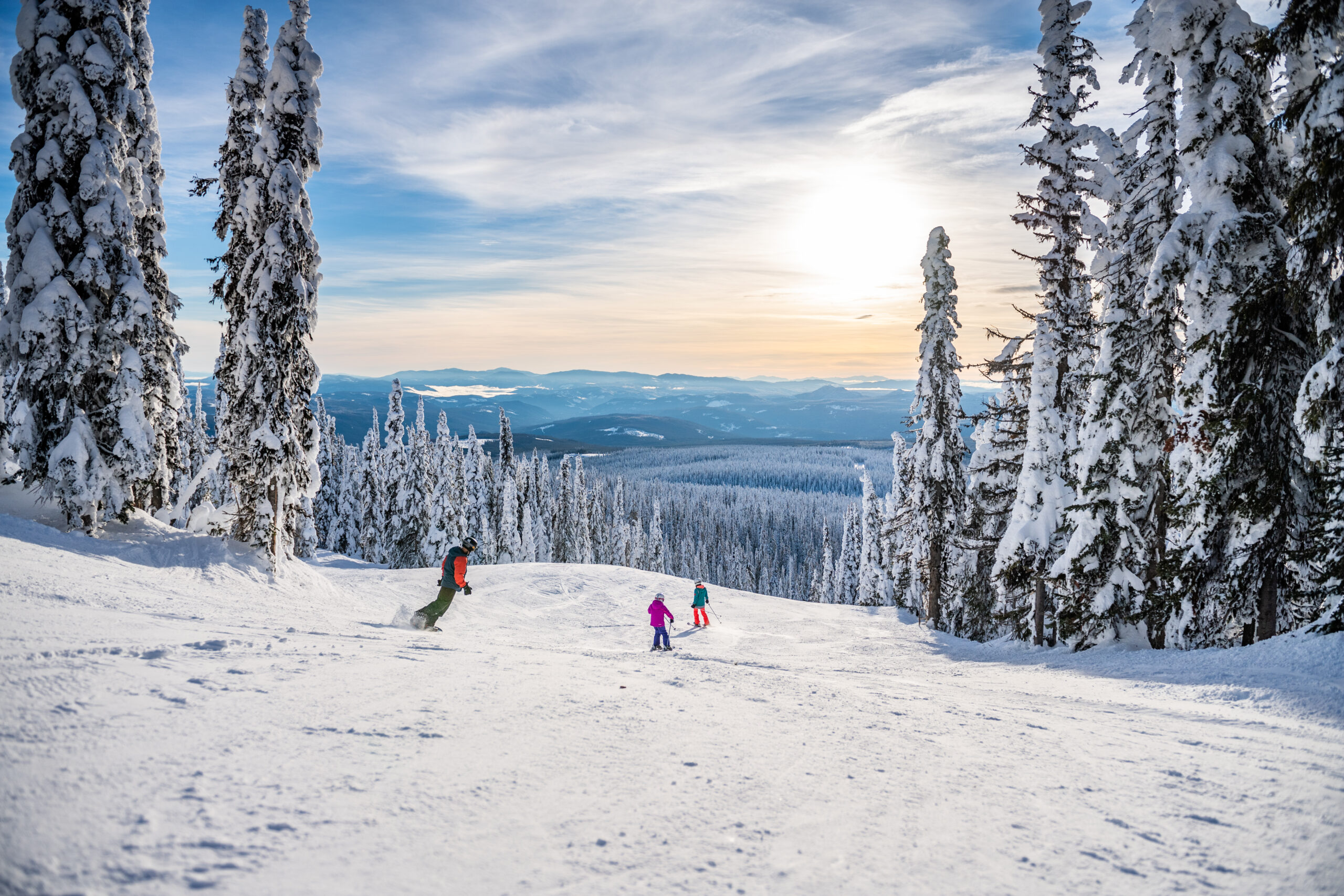
Some Winters You Remember. This Is One Of Them.
Nobody signs up for a season because of a stats table. They sign up for mornings like this one, and then spend the rest of their life comparing every holiday to it.
Before anybody else is awake
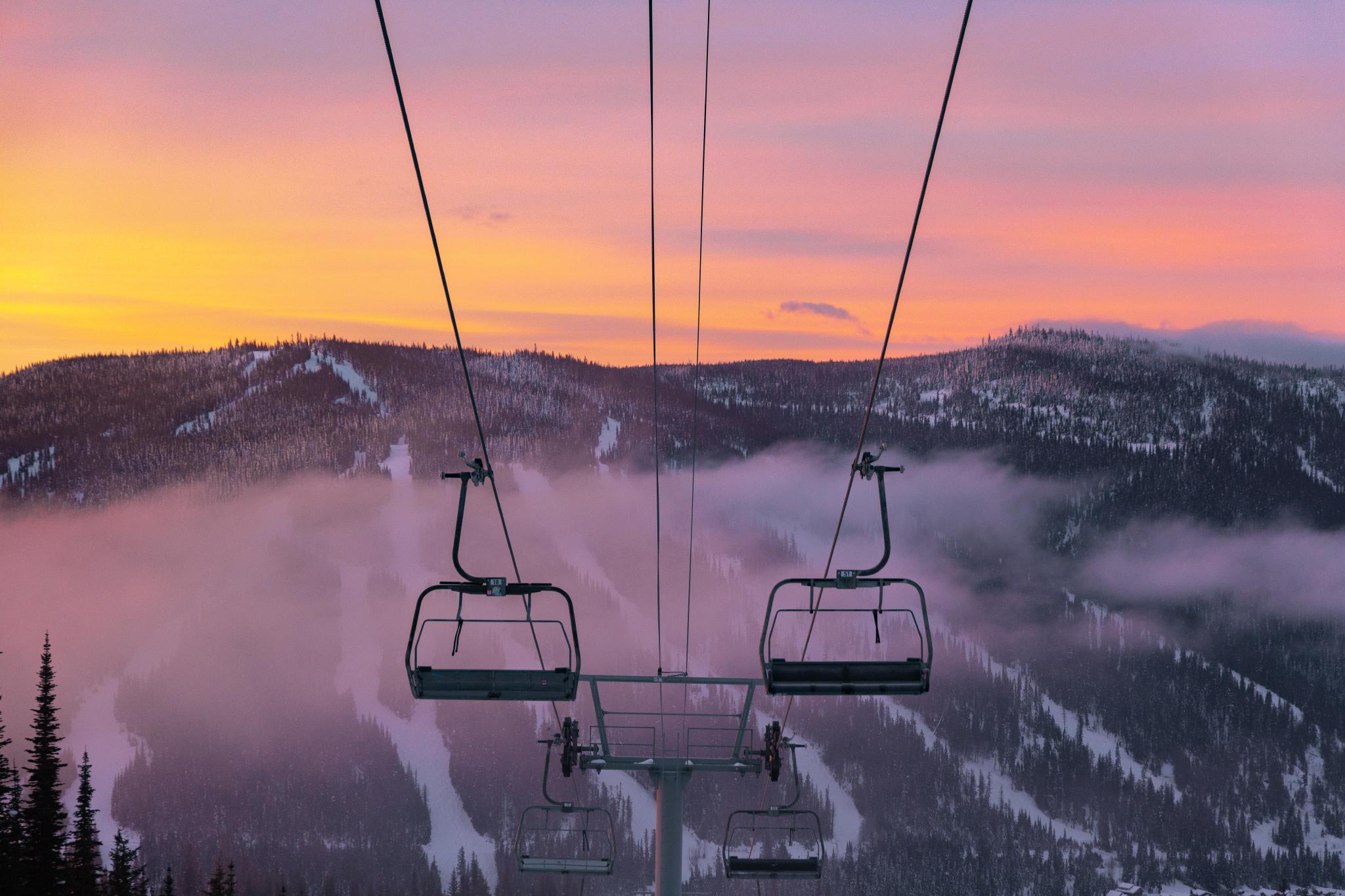
Somebody Sets That Corduroy At Five In The Morning.
The perfect first run of the day is a night shift someone else worked. A season teaches you how much invisible work sits behind a mountain that just seems to open every morning.
Sun Peaks
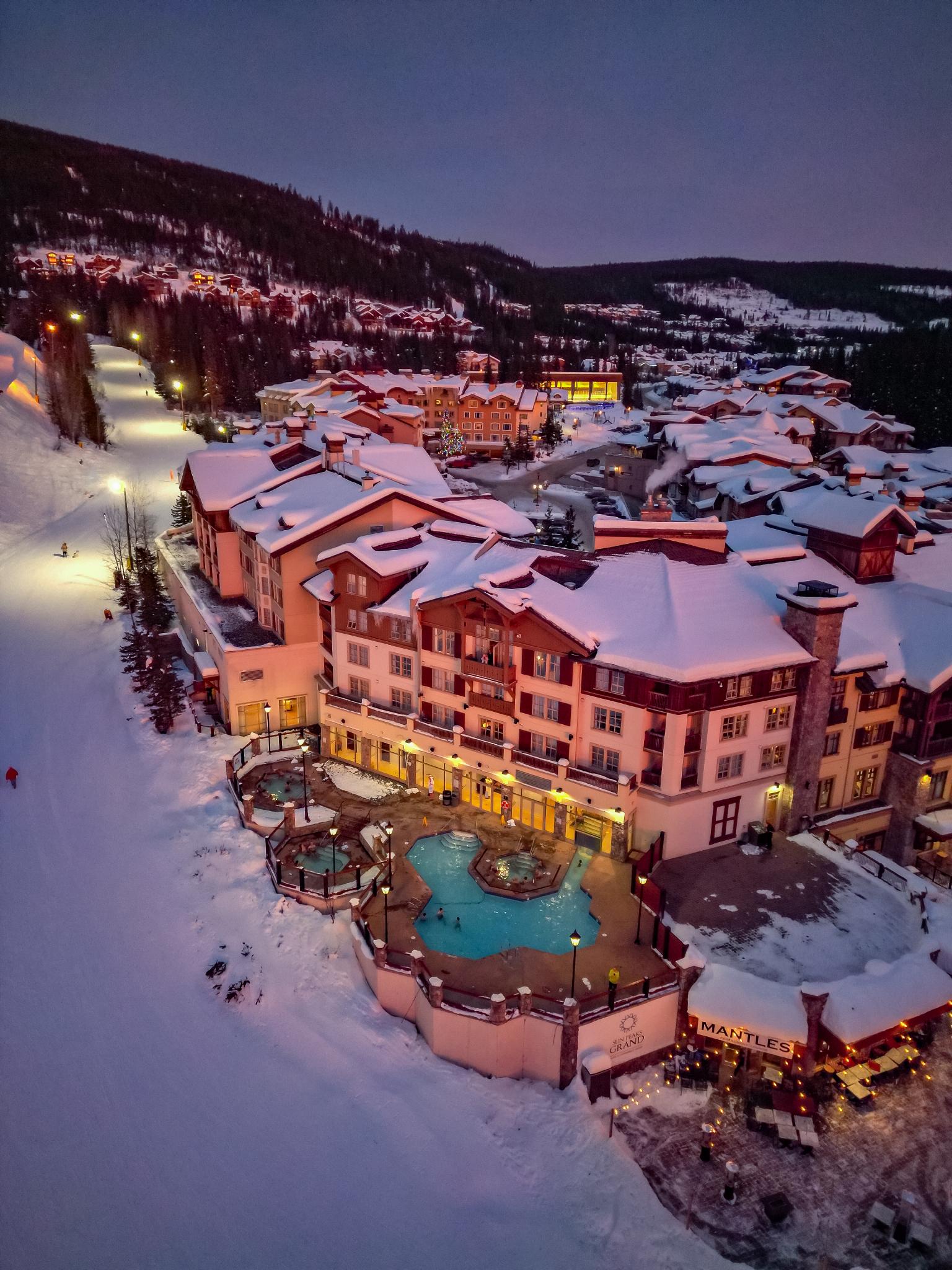
A Village That Actually Feels Like A Village.
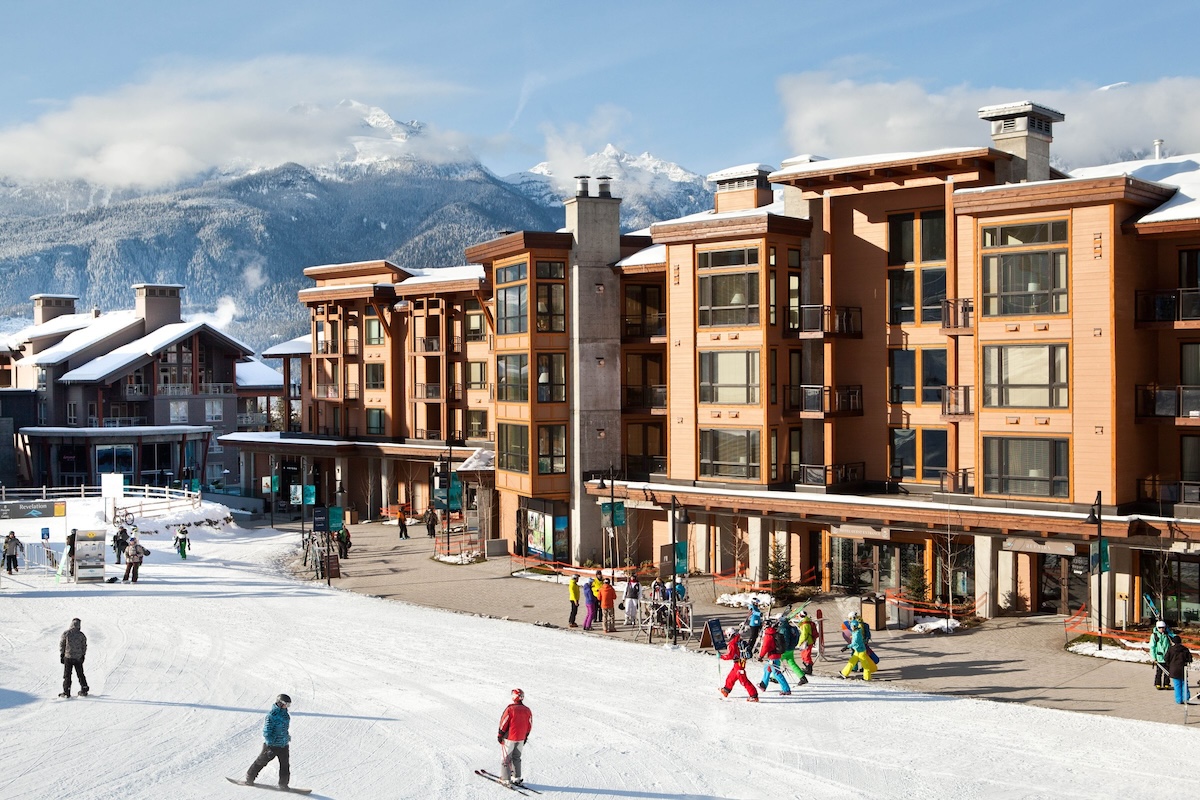
Pedestrianised, walkable, and busy in the evenings. The biggest social scene of any resort we run, and the biggest group of interns to share it with.
The Mountain, In Numbers.
Approximate and rounded, because resorts revise these figures themselves year to year. Enough to compare scale, not enough to plan an expedition around.
The Big Four
Panorama
Sun Peaks
Big White
Revelstoke
Vertical drop
∼1,225m
∼880m
∼780m
∼1,713m, the biggest in North America
Skiable terrain
∼2,850 acres
∼4,270 acres, second largest in Canada
∼2,765 acres
∼3,120 acres
Average snowfall
∼750cm a season
∼540cm a season
∼750cm a season, the “champagne powder” claim
∼1,200cm-plus, one of the snowiest resorts anywhere
Character
Purpose-built alpine village
Three peaks, pedestrian village
Family-focused, famously friendly
A real working town, not a resort bubble
The Boutique Trio
Fairmont Hot Springs
Ski Martock
Cape Smokey
Province
British Columbia
Nova Scotia
Nova Scotia
Vertical drop
Roughly ∼500m, similar scale to its Purcell neighbours
A fraction of the BC hills, well under 100m
Small, but rising straight off the Atlantic
Skiable terrain
Small and boutique, much quieter than Panorama
A small local hill, a handful of runs
Smaller again, and more remote than Ski Martock
Average snowfall
Similar Purcell snowfall to Panorama, in the same valley
Modest, topped up by ocean-effect snow
Roughly 4 to 6 metres a season
Character
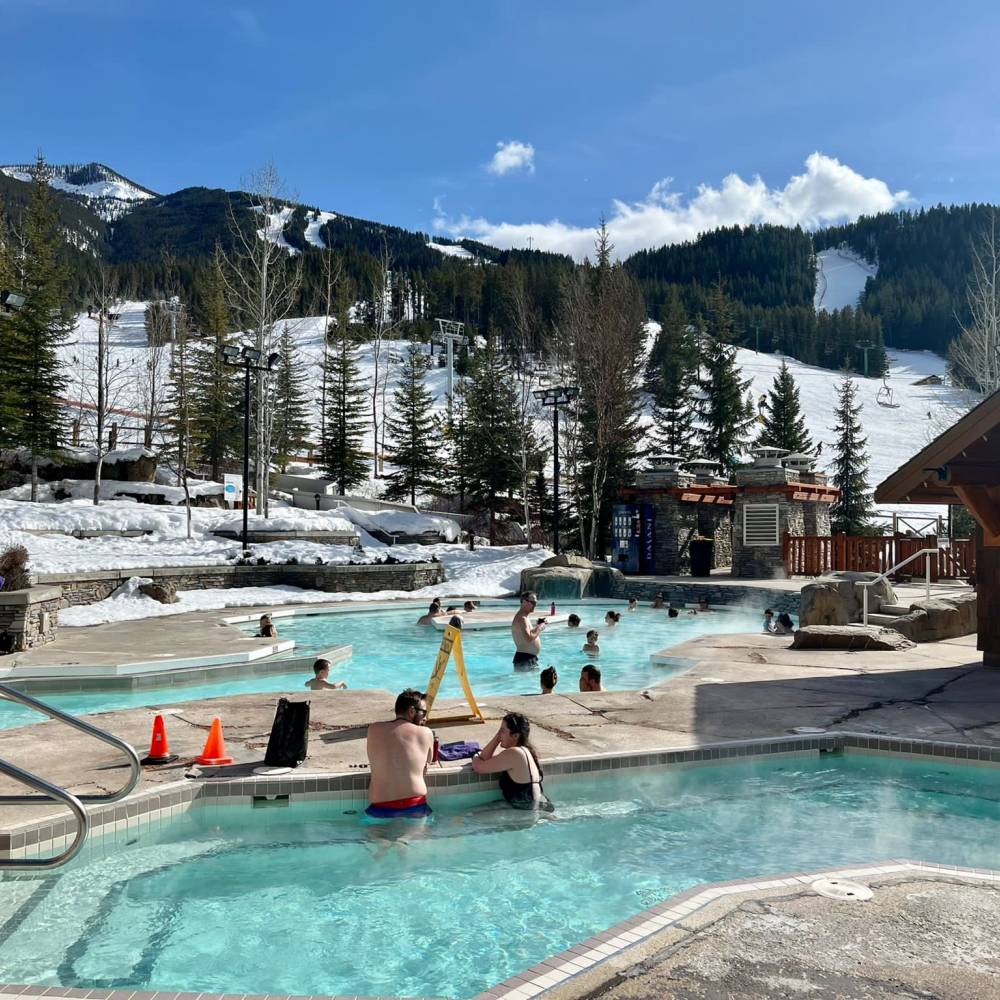
Hot springs resort near Invermere, same Purcell scenery as Panorama
Right on the Atlantic, near Windsor and under an hour from Halifax
On the Cabot Trail, Cape Breton Island, views to die for
Nova Scotia is a province, not a resort. Ski Martock and Cape Smokey are two separate hills within it, at opposite ends of the province: Ski Martock sits near Windsor, under an hour from Halifax, while Cape Smokey is up on Cape Breton Island on the Cabot Trail. Fairmont's figures lean on Panorama and Invermere's own, since the two sit in the same stretch of the Purcell Mountains and share very similar terrain and weather.
Figures are the kind you'd find on any resort's own stats page, rounded for comparison. Ours is not the authority on them; check the resort directly if a number matters to your decision.
Pick the mountain for the skiing. Pick the resort for the winter you actually want to live.
Terrain And Who It Suits.
The mountain shapes your day far more than the town does. This is the honest version of what each one is actually like to ski or ride.
PMV
Panorama: big vertical, wide open, genuinely quiet
One of the biggest verticals in Canada packed into a resort that never feels crowded. Long groomed cruisers off the top, a proper bowl above the treeline, and lift queues that mostly do not exist. Best suited to skiers who want mileage and space over a lively base area.
SPR
Sun Peaks: three mountains, gentle by BC standards, built for progression
Spread across three linked peaks with a huge amount of low-intermediate terrain, which is exactly why it suits a first winter of teaching. Ski only, no hybrid this year, and the terrain rewards clean technique over brute confidence.
BW
Big White: famous snow, famous friendliness, ski only
The "champagne powder" reputation is deserved, and the whole resort is built around being unintimidating, which is why families come back every year. Ski only, and the most training days of any standard internship, because the snow school leans hard on that quality.
RMR
Revelstoke: the biggest vertical, the most snow, and it shows
Steeper, colder, more serious terrain than the other three, in a real town rather than a built resort. It suits someone who already has a season or two behind them and wants their skiing pushed rather than eased in.
NS
Ski Martock and Cape Smokey: small hills, huge scenery
Ski Martock is tiny next to the BC resorts, in vertical and in acreage both, and nobody goes for the terrain. It's a genuinely different experience: right on the Atlantic, with jaw-dropping ocean scenery that has nothing to do with big mountains. It suits Level 1 candidates after a real job placement, not skiers chasing terrain.
Town Life And What Evenings Look Like.
This is the part people underestimate. You will spend more of your winter in the accommodation and the town than on the hill after dark, and the four could not be more different.
PMV
Panorama and Invermere: quiet pockets, but two lively nights a week
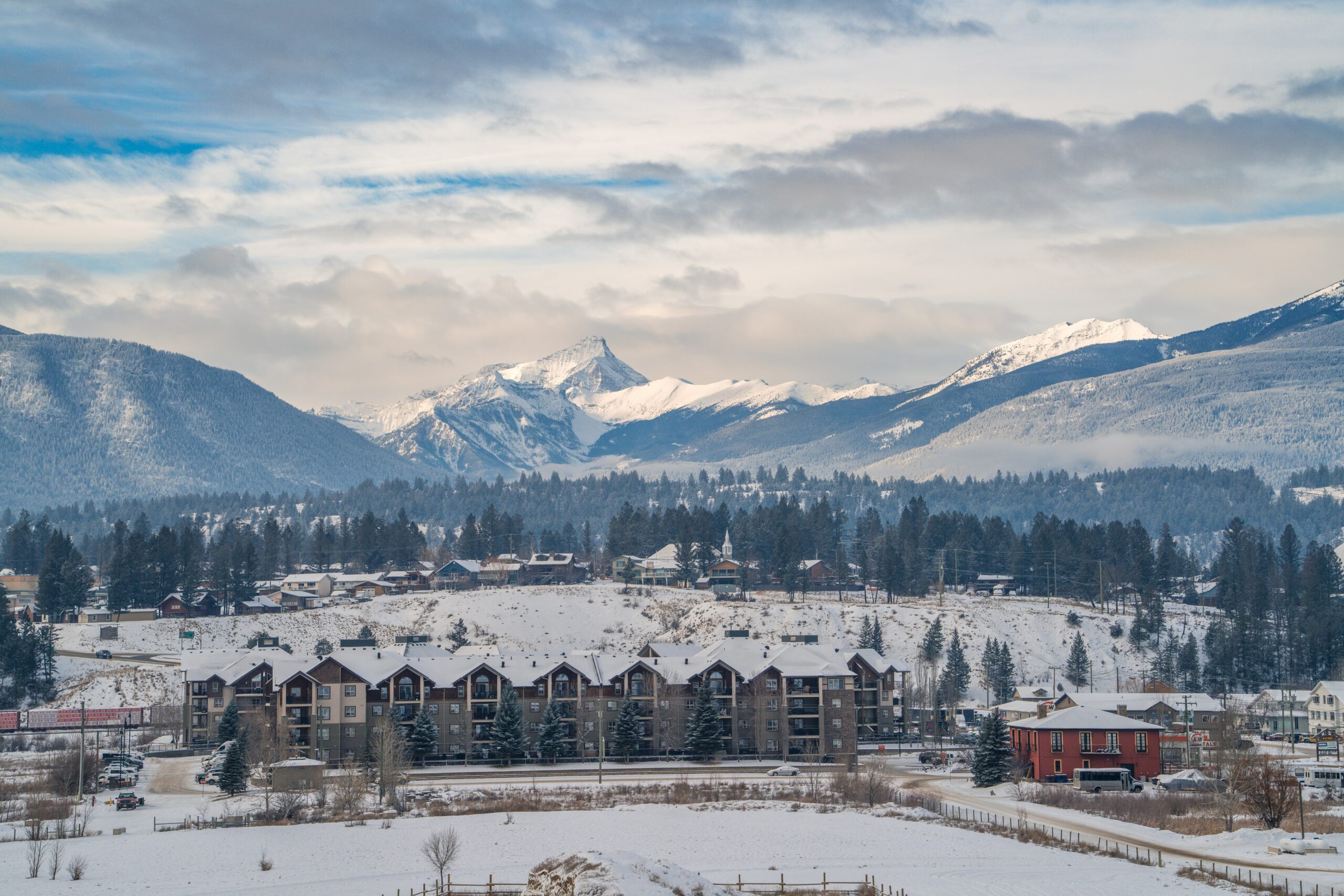
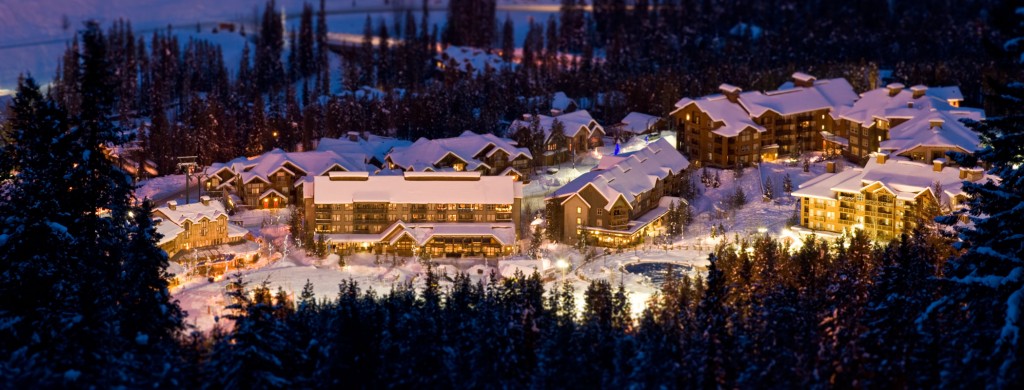
Panorama and Invermere are quieter pockets hidden high in the Purcell Mountains, with stunning scenery and a laid-back mountain community. It lacks the wow factor of a place like Banff, but makes up for it with a real mountain community feel that a commercial gateway town never quite manages.
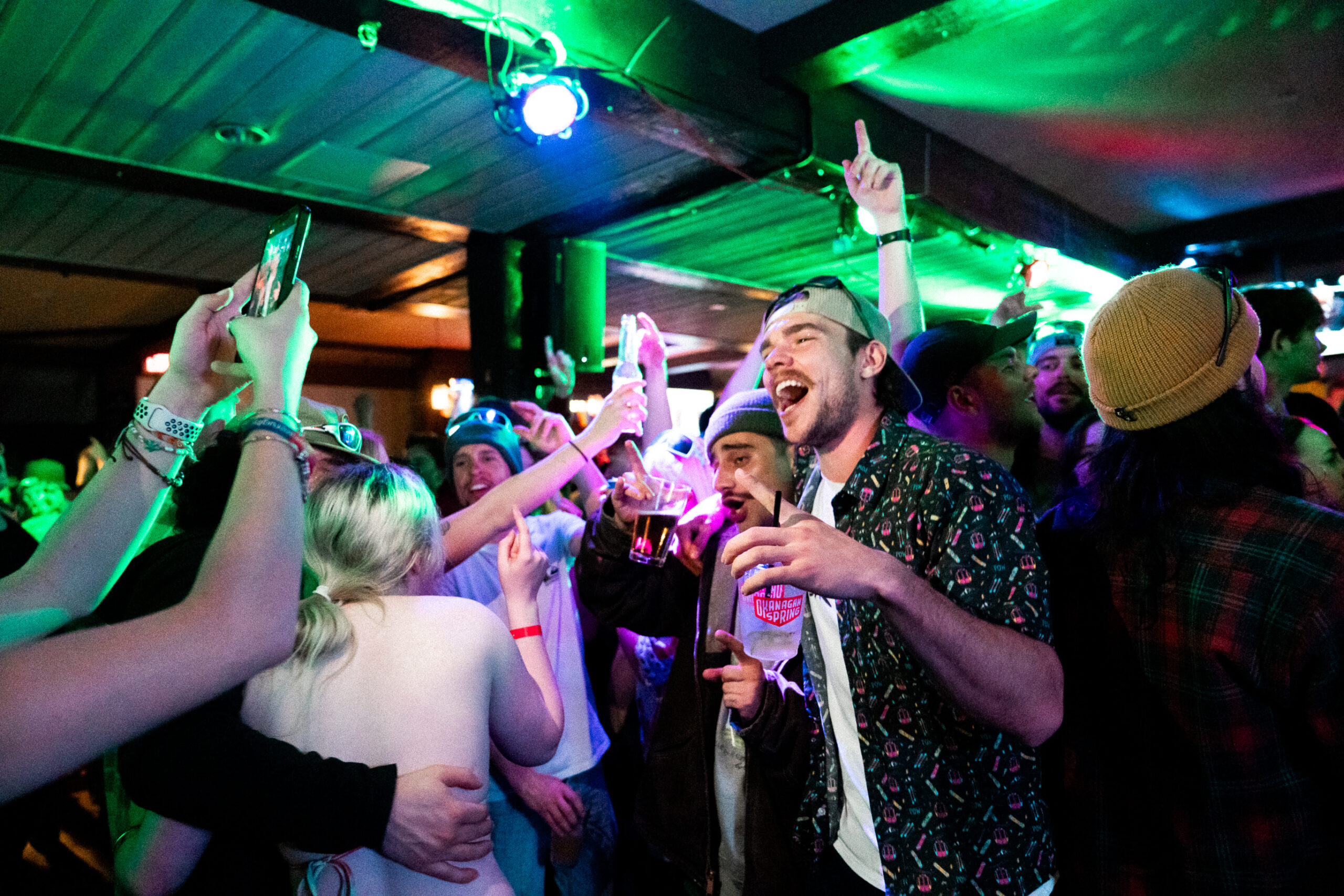
Resort has two bars, and Invermere, twenty minutes down the road, has two more, so on the two nights a week everyone tends to migrate down, it gets genuinely lively. Interns who have done both Panorama and Sun Peaks sometimes rate a big night in Panorama above one in Sun Peaks precisely because everybody ends up in the same small handful of bars. Sun Peaks wins on the number of festivals and live events across a season.
It's also common for people to arrive for one winter and end up staying through the summer. The resort itself quietens right down once the lifts stop, but Invermere heats up as Windermere Lake, right on its doorstep, comes into its own.
SPR
Sun Peaks: the biggest social scene of the three internship resorts
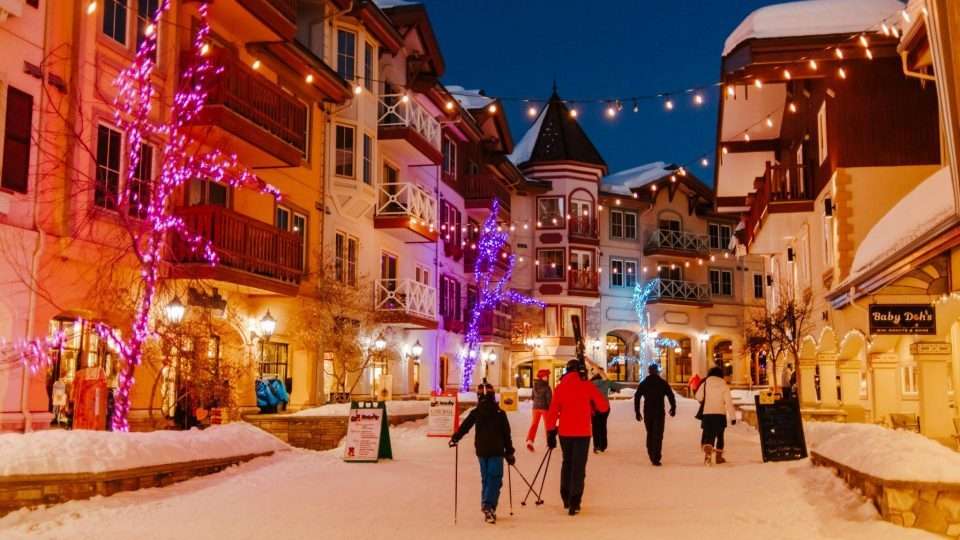
A proper pedestrian village with a real range of bars and restaurants, and the largest intern group of any of our standard resorts. If a busy social season matters to you as much as the skiing, this is usually the answer, and it also runs the most festivals and live events of the three.
BW
Big White: the second-busiest resort in Canada, and younger than you'd think
Not quieter than Sun Peaks. Big White is Canada's second-busiest ski resort, with a younger vibe than the name "family resort" suggests, helped along by the number of young Australians who come over to work there. It runs a bigger ski school than Sun Peaks in a slightly smaller village, and while Sun Peaks has the bigger terrain, Big White has the bigger tourist numbers.
RMR
Revelstoke: a mecca for powder junkies, and unlike anywhere else on this list
A real mecca for powder hunters and pros, and for anyone wanting to escape the commercial chaos of Whistler and resorts like it. A completely different feel, genuinely unique, and one of those places worth a pilgrimage at least once in a season. It's the kind of resort you could picture actually living in once the pre-season excitement of a normal ski season has worn off, not just visiting. High on the list for a reason.
A Word On Safety.
Worth a straight paragraph rather than a statistic-heavy section, because the honest answer does not need dramatising.
All four are managed, patrolled resorts with ski patrol, avalanche control on the terrain they open, and first aid on the hill every day. Revelstoke's terrain is more serious and its alpine and glade zones demand more respect. Big White and Sun Peaks are both built around beginner and family safety as a selling point. None of that means accidents do not happen, and it is exactly why proper travel insurance that covers instructing is non-negotiable, covered in full in our course insurance guide and IEC working visa insurance guide. It is a background fact of mountain life, not a reason to worry before you arrive.
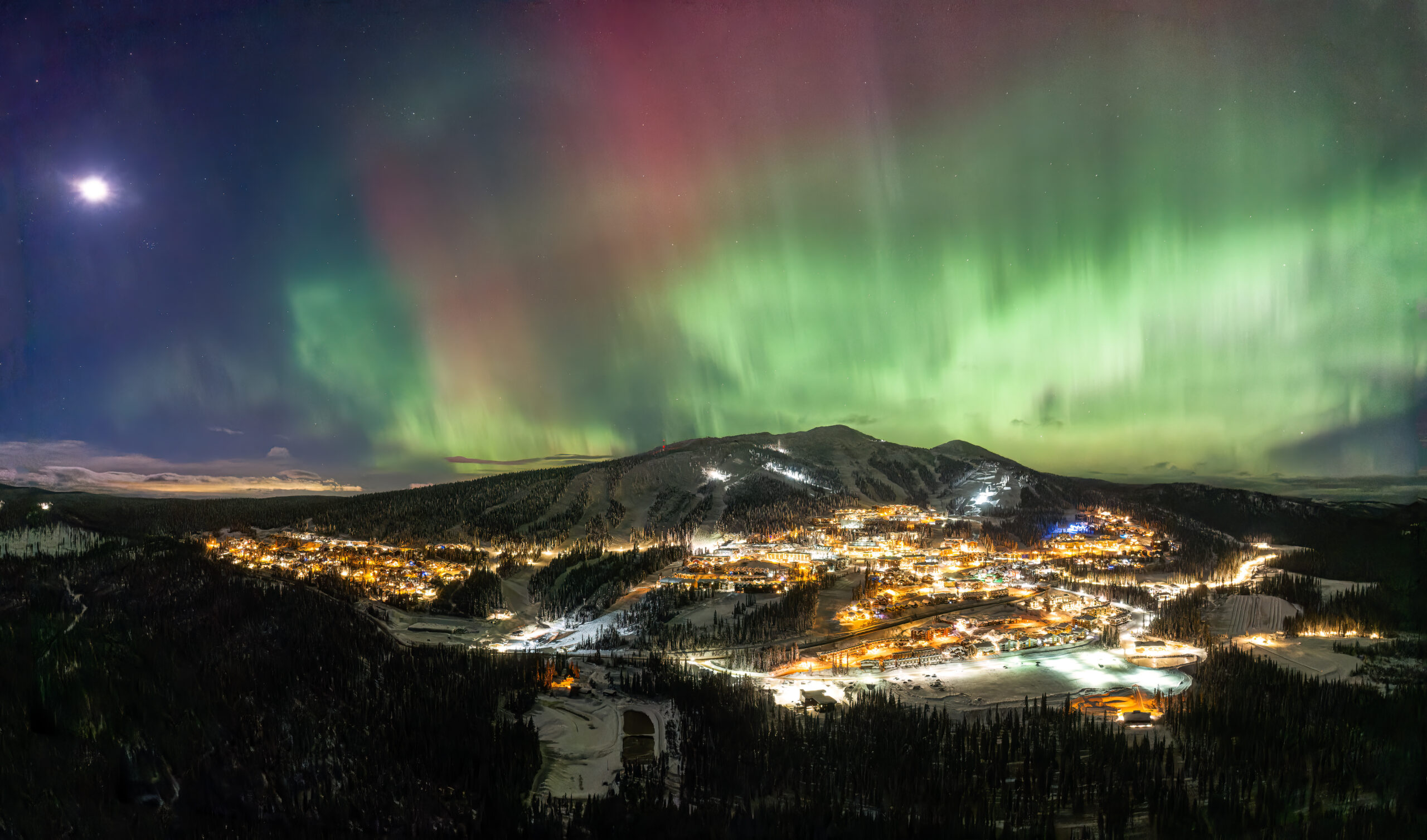
Big White
The Second-Busiest Resort In Canada.
Bigger ski school than Sun Peaks, a slightly smaller village, and a younger crowd than "family resort" suggests. The lights stay on late here.
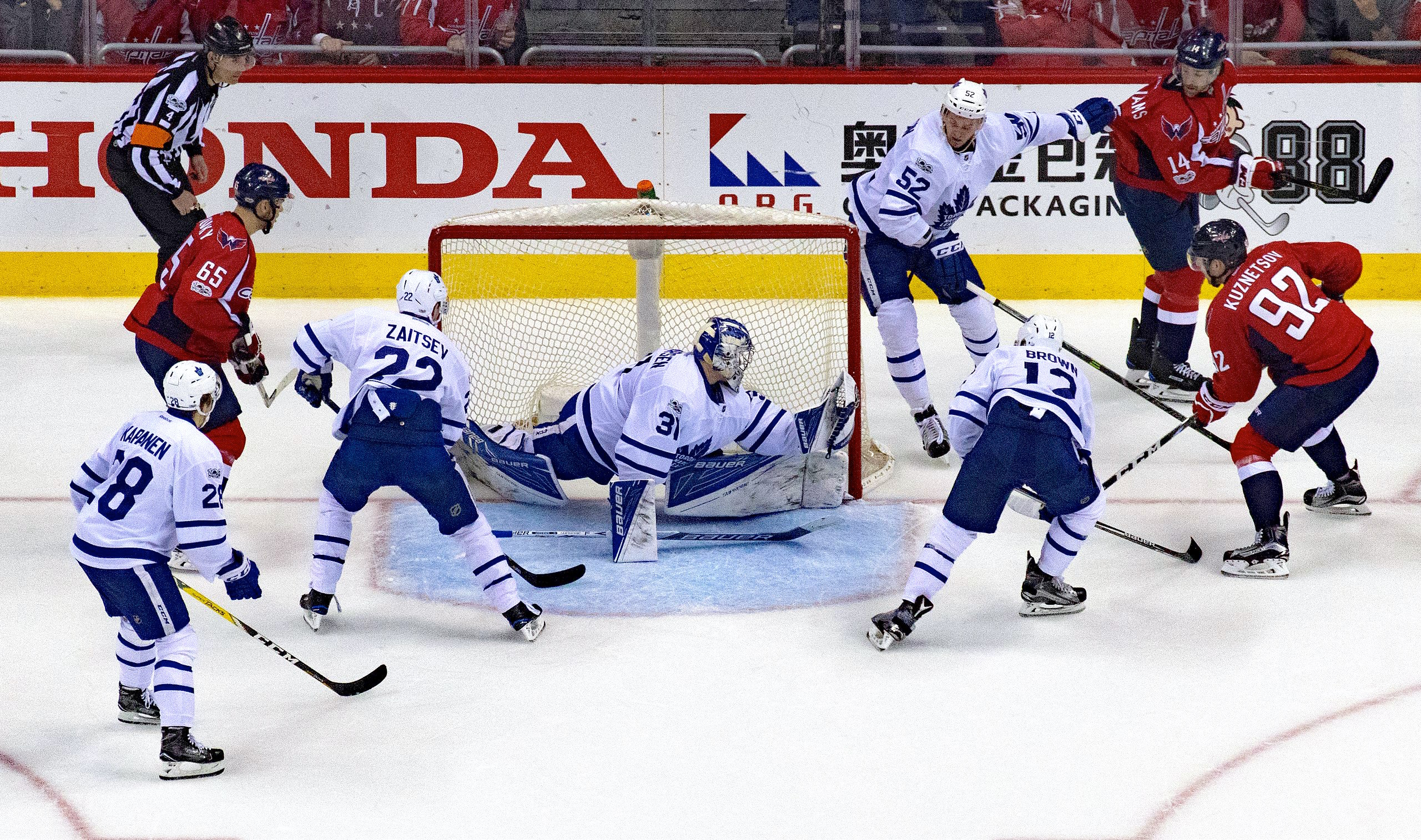
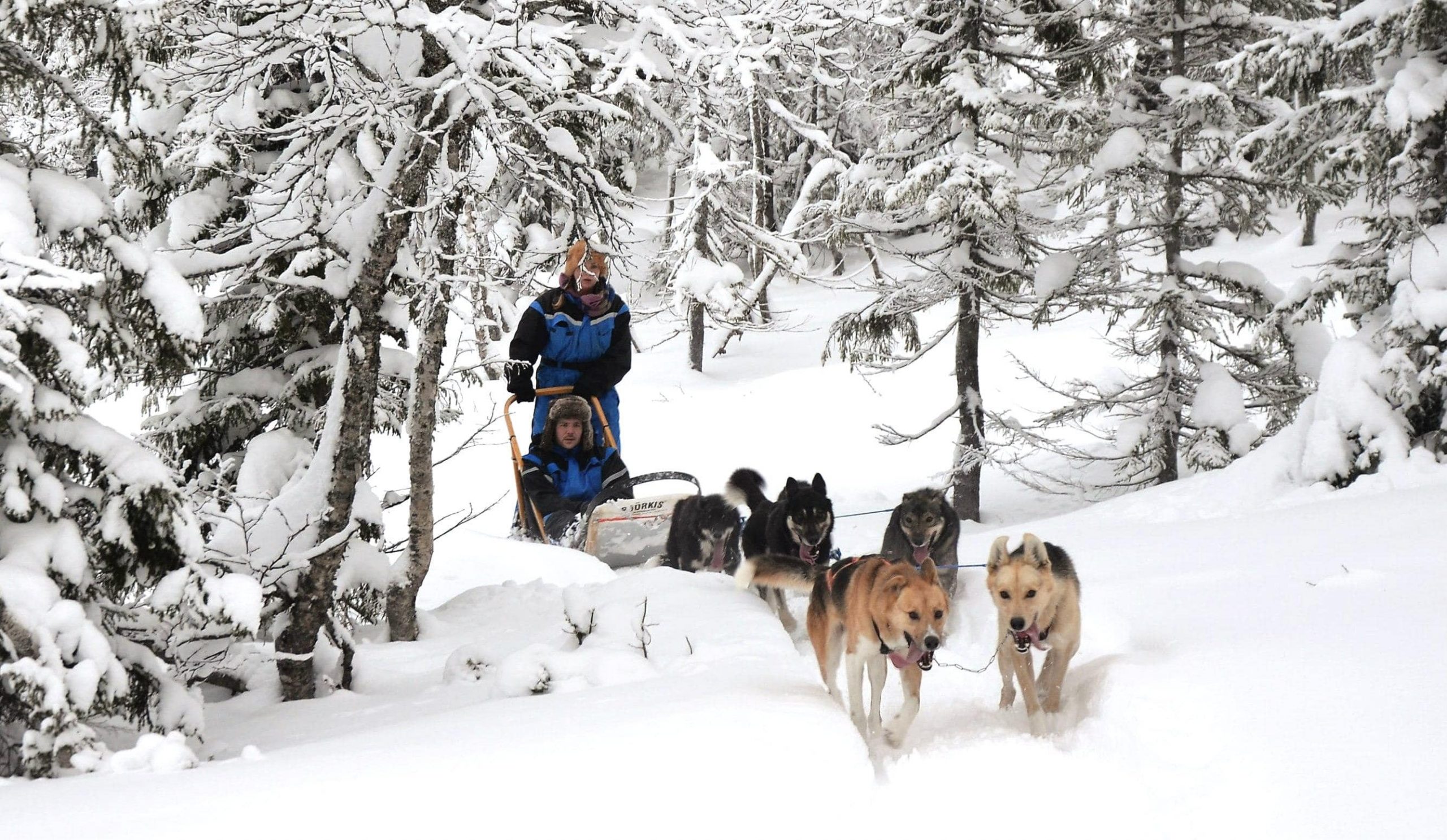
Days Off Are A Whole Other Thing.
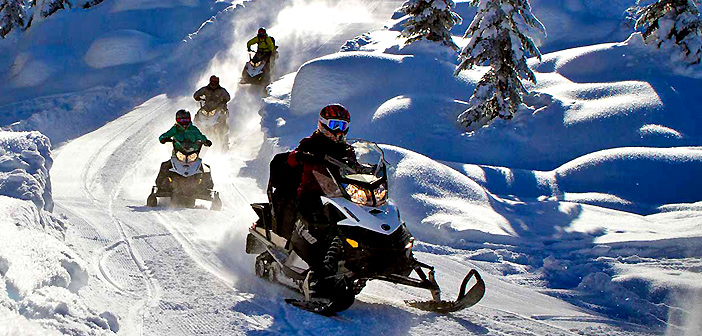
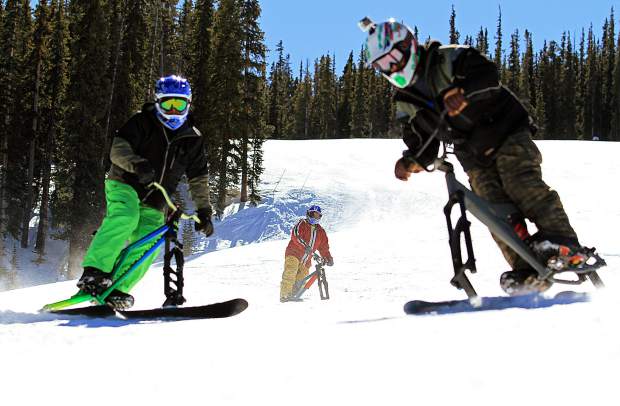
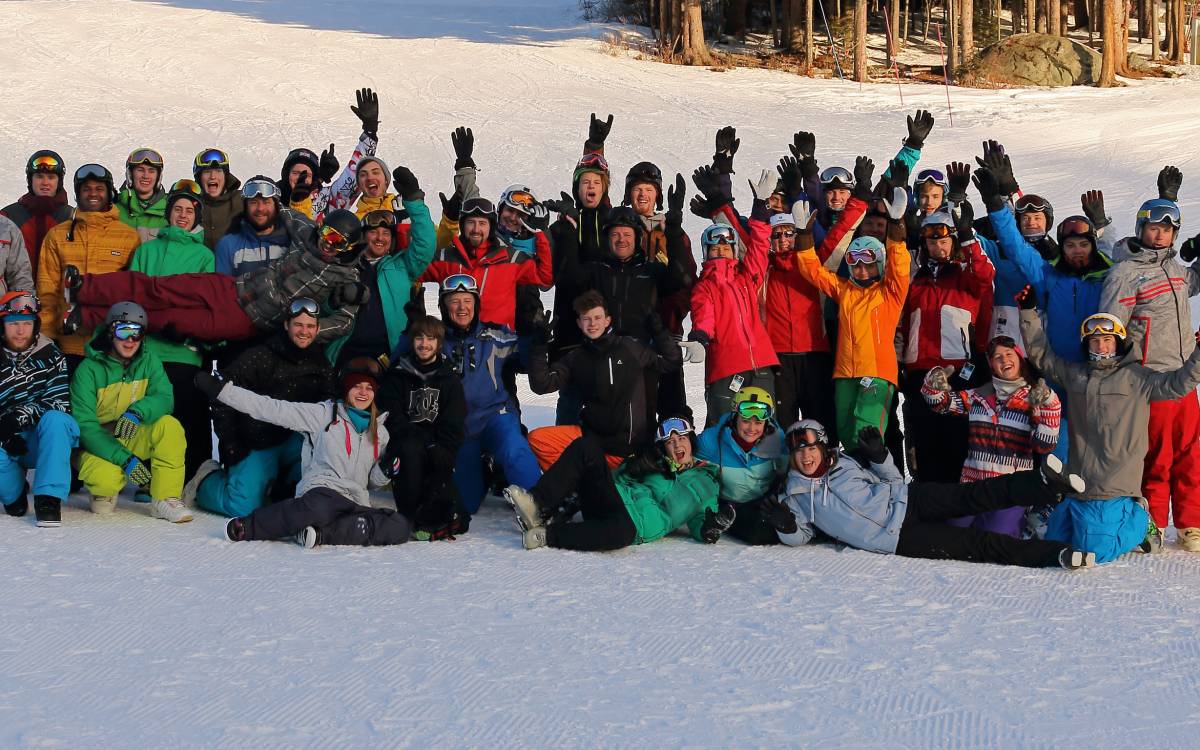
Skiing is what you are there for. It is nowhere near all there is to do.




Resort Village, Or A Real Town?
This splits the four cleanly in two, and it matters more than most people realise before they book.
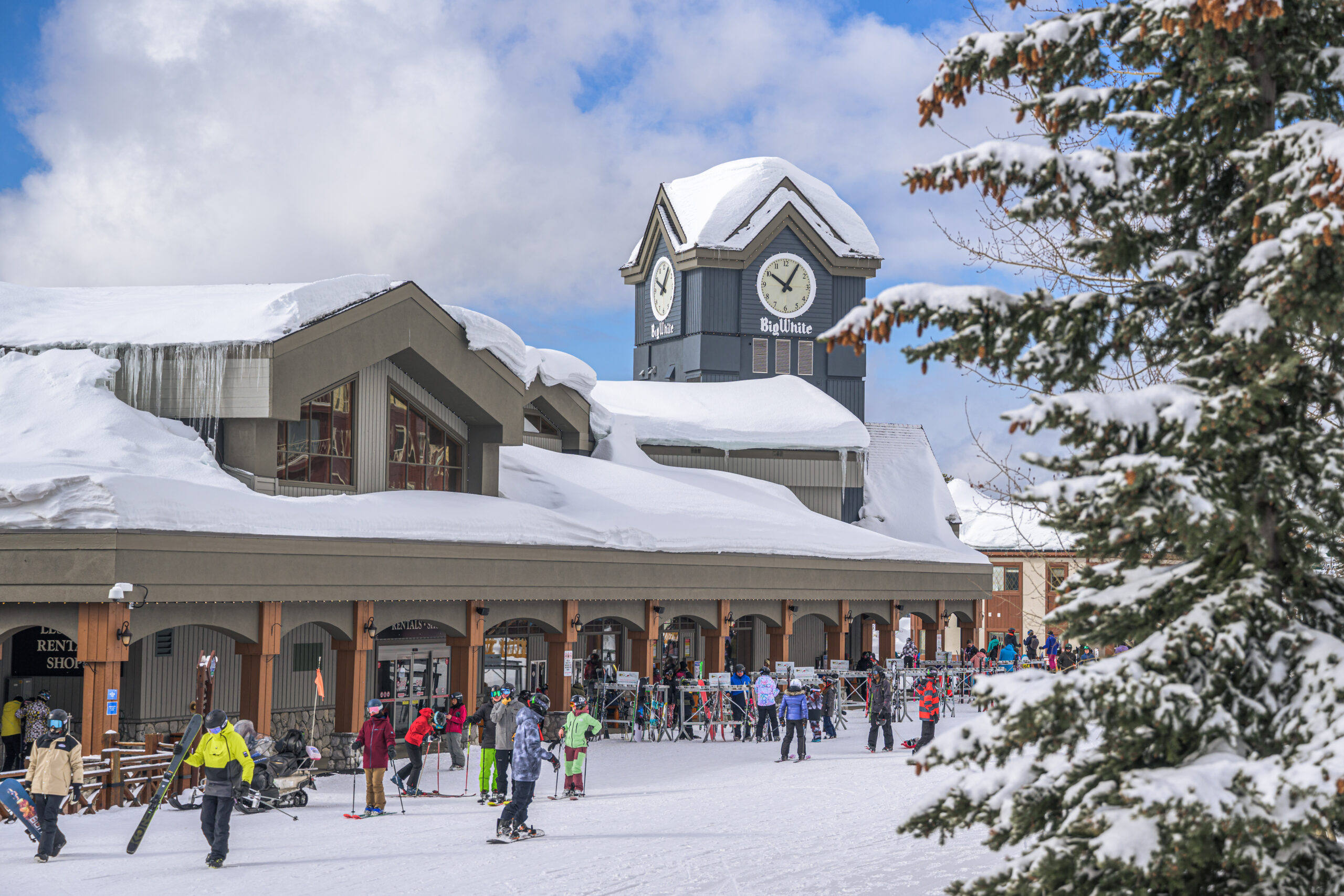
Sun Peaks and Big White are both classic resort-living: everything you need is built into the village, and you can happily go weeks without leaving it. Panorama and Revelstoke are more town-living, with a real community just down the road that existed long before the ski hill did. If you think you might need a change of scenery from living, working, eating, sleeping, partying and skiing all in the same small footprint, do not pick a resort village that is a long way from anywhere else.
Panorama in particular is a very independent resort with lower traffic than the other three, which is a genuinely good platform for learning: quieter lifts, more one-on-one attention, less competing for space. The trade-off is that you do need to be a slightly better skier to make the most of it, since the terrain does not hold your hand in the way Sun Peaks or Big White's does.
How close is the nearest real town?
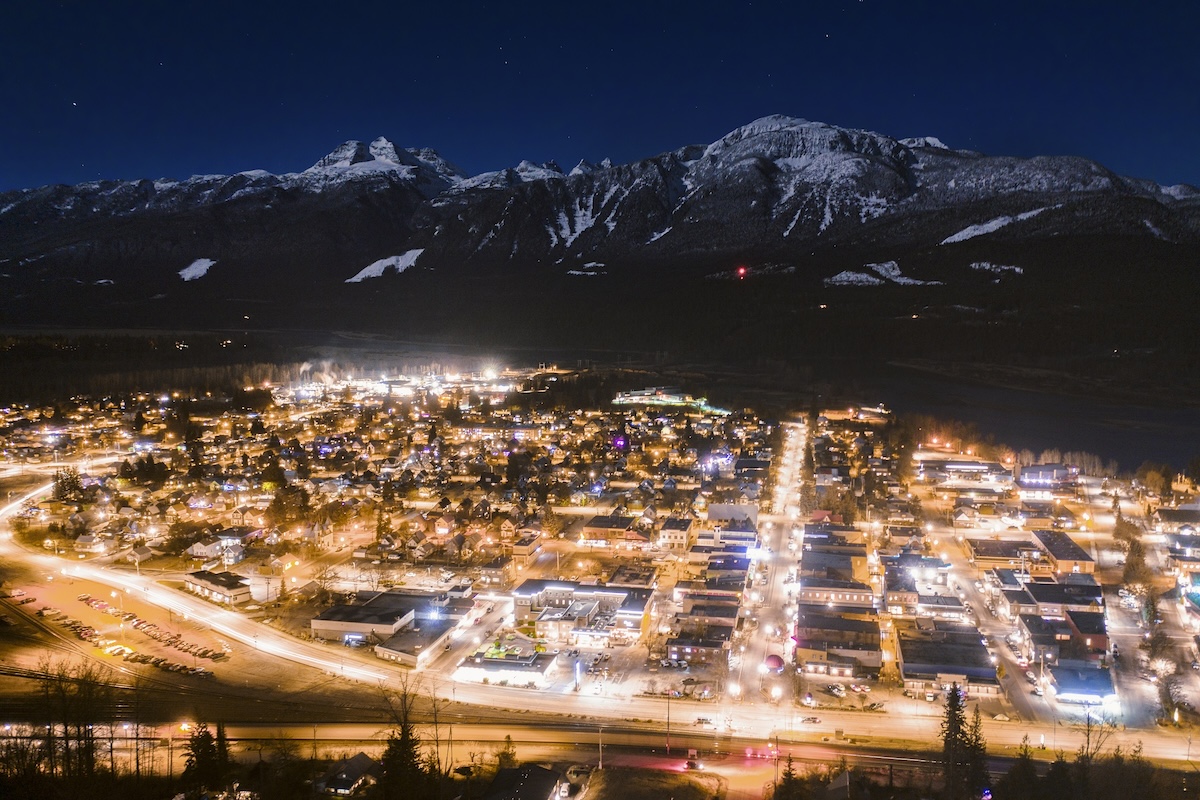
Big White is the most convenient, with Kelowna a short drive away. Sun Peaks has Kamloops nearby too, though it is not quite as easy to get to as Kelowna is from Big White. Panorama is close to Invermere. Revelstoke wins outright: the resort is only a seven-minute bus ride from its own genuinely characterful Canadian mountain town.
Revelstoke
A Town That Was Here Long Before The Ski Hill.
Seven minutes on the bus from the lifts to a real high street with a real community. Not a resort bubble, and that is precisely the appeal.
Big Fish, Small Pond.
Worth knowing before you compare spreadsheets of terrain and snowfall.
At a smaller, more independent resort like Panorama, you genuinely feel like a big fish in a small pond. The lifties, the instructors, the ski patrollers and the kitchen staff all know each other, and you quickly become part of that: it is a big family affair in a way that is harder to get at a bigger, busier resort where the staff turnover and headcount are both much higher.
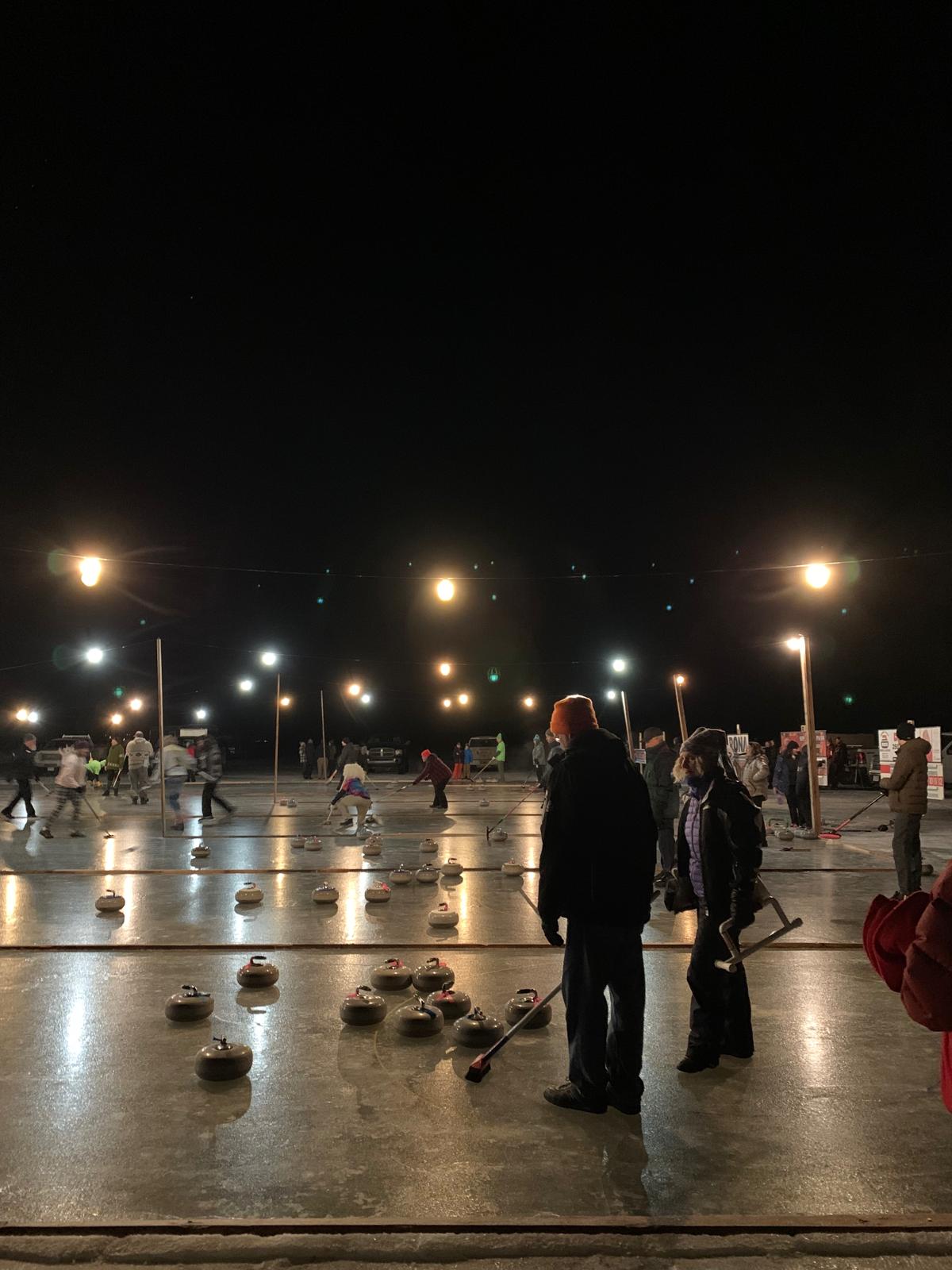
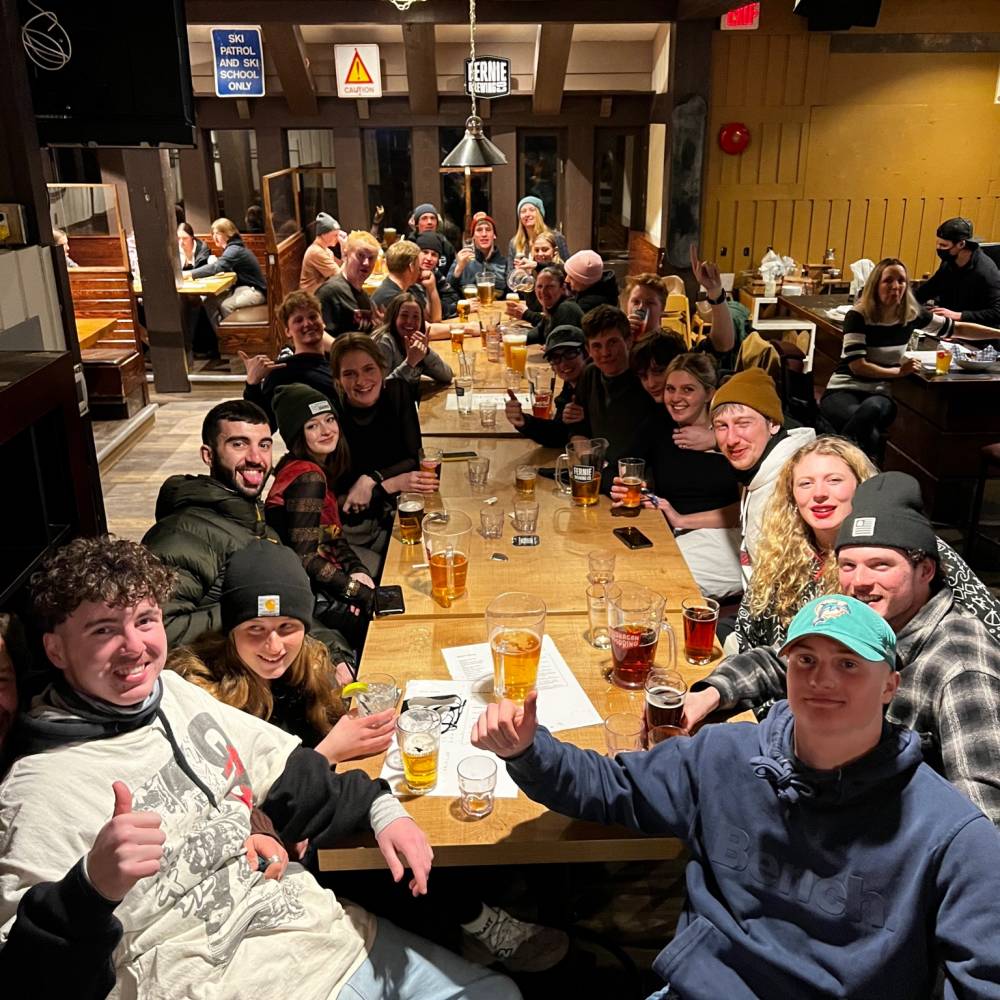
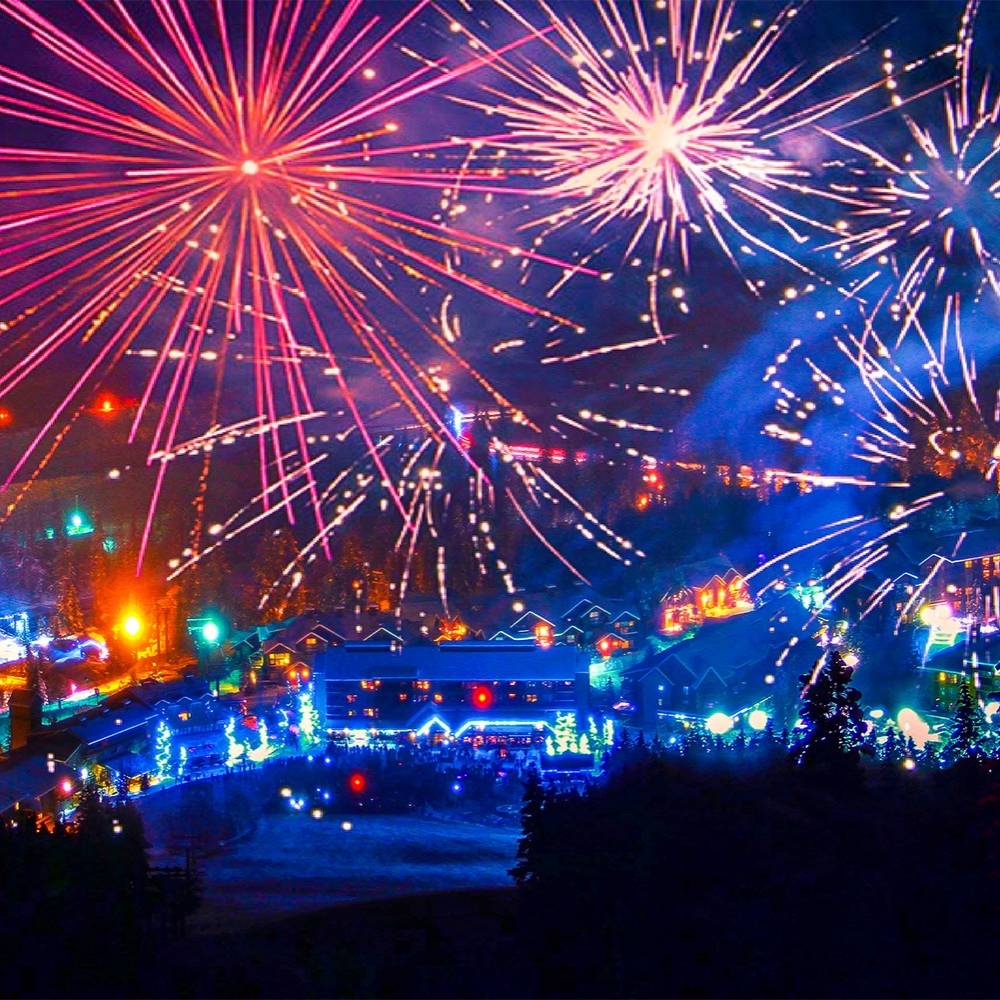
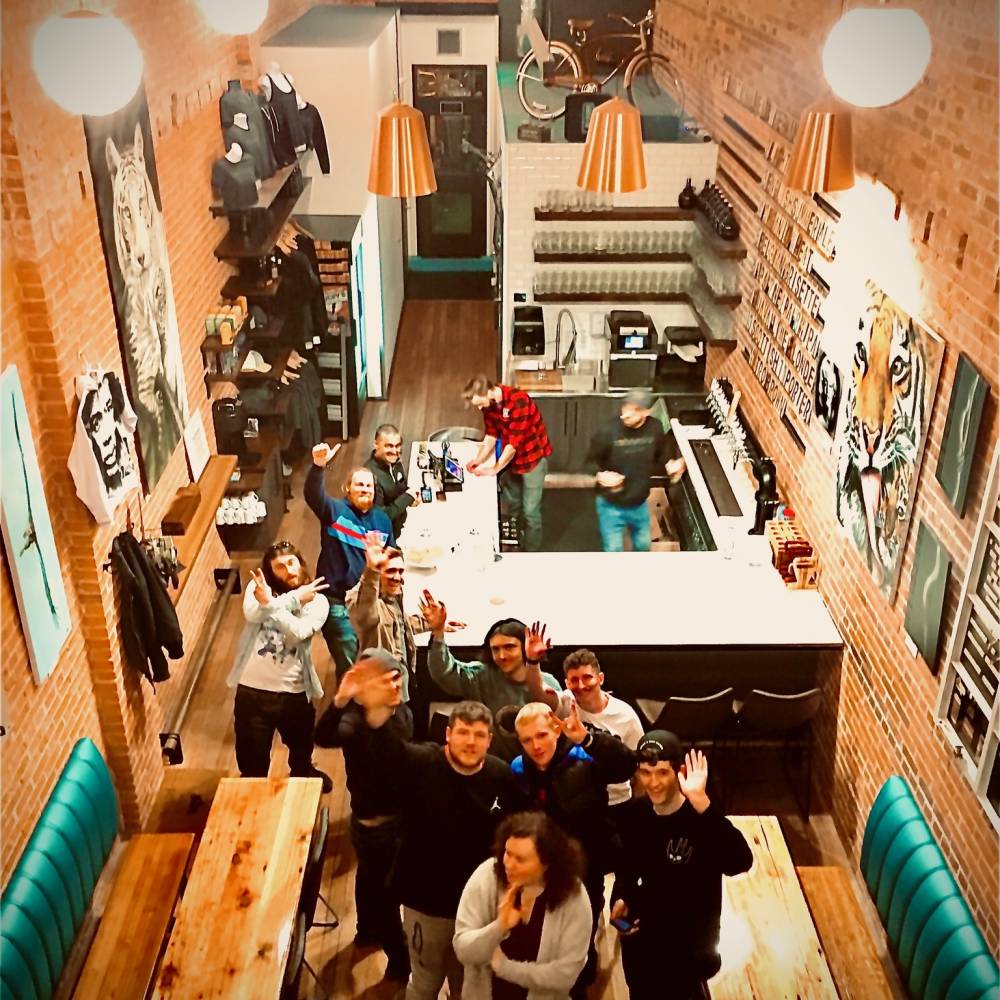
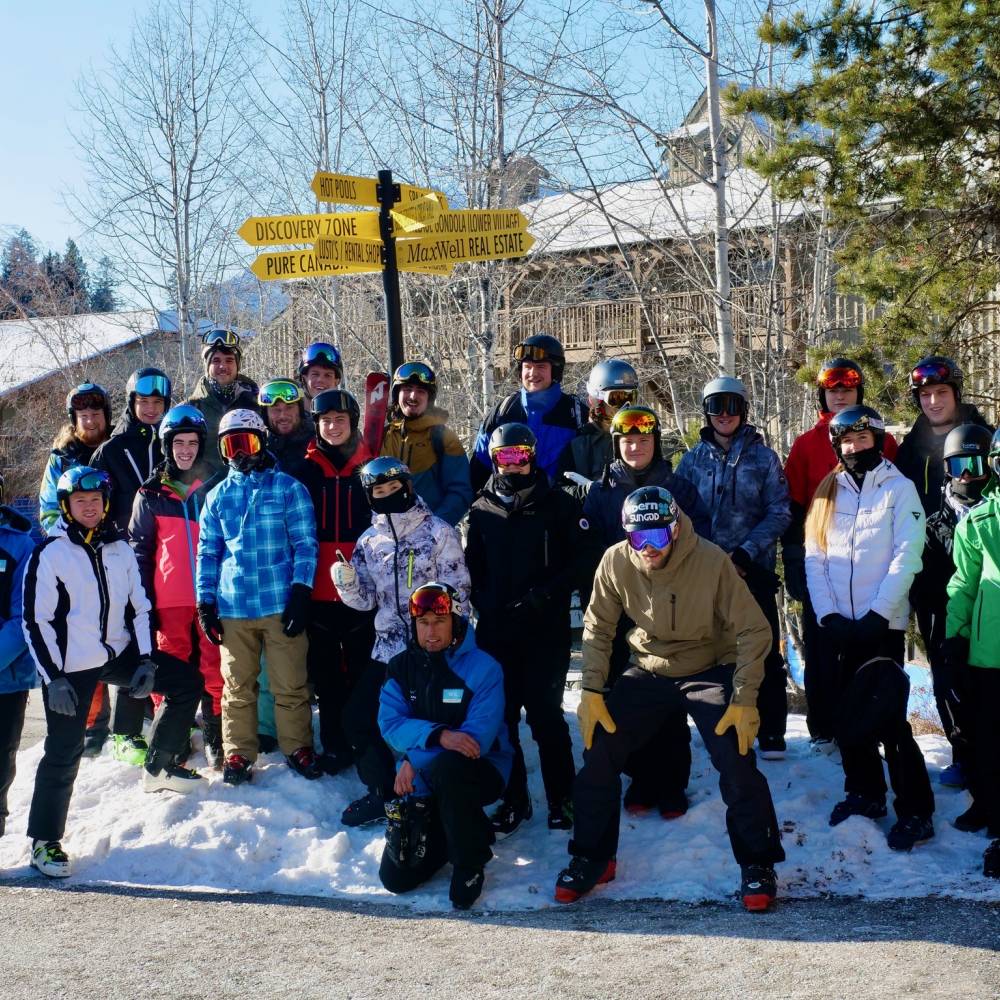
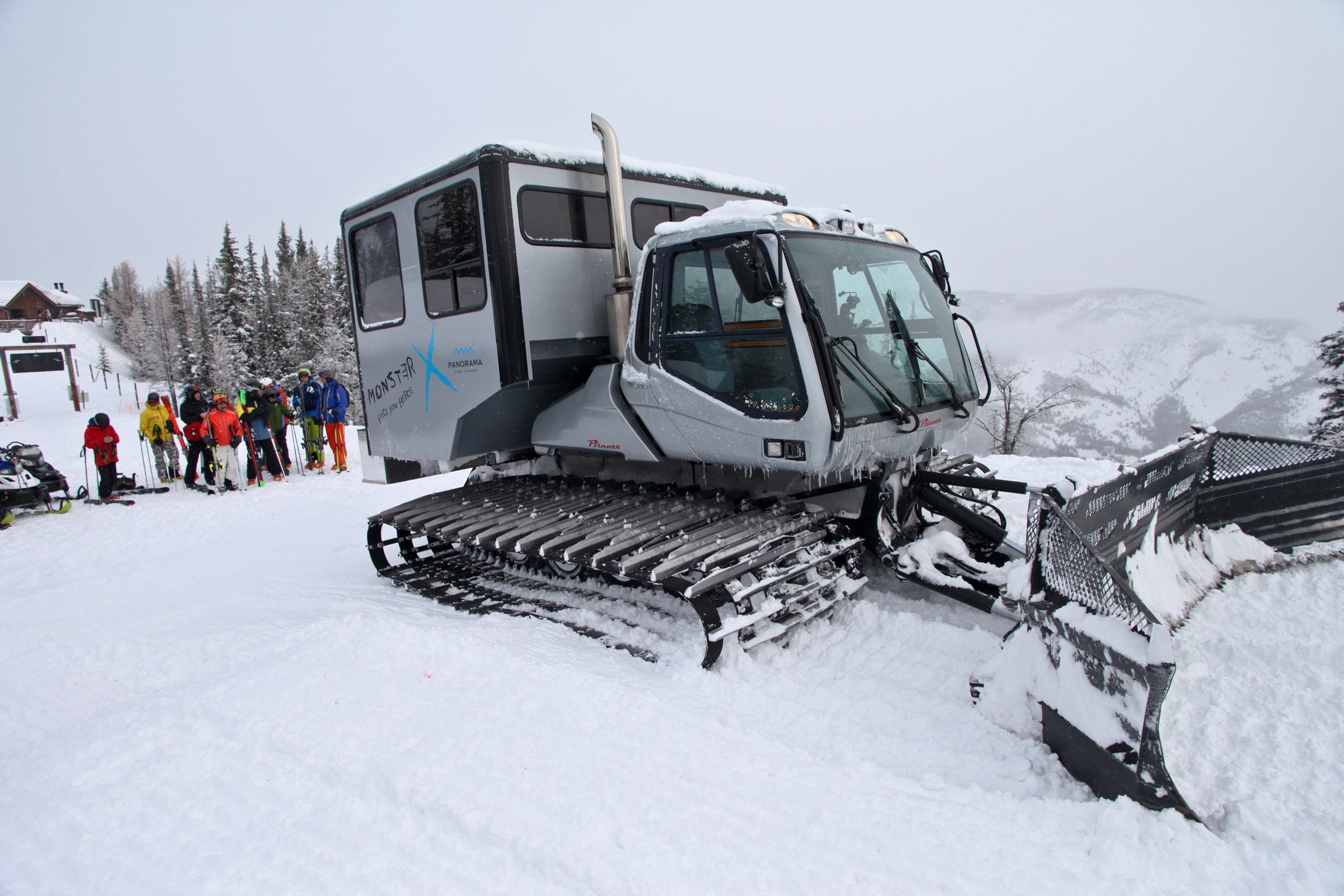
Which is what the photographs below are actually of. Phone shots, staff nights, curling bonspiels and the daft bits in between. Not a single one of them is a marketing photograph, which is precisely the point.



So, Which One?
Five short answers, honestly given.
✓
Want the biggest social scene
Sun Peaks or Big White. Both run a proper village social scene, the biggest intern groups, and the busiest calendars of events.
✓
Want space and big vertical
Panorama or Revelstoke. The two biggest verticals on this list, and the two with the most room to breathe on the hill.
✓
Want famous snow and a friendly resort
Big White or Sun Peaks. Both built around being unintimidating, with the reputation and the ski school culture to back it up.
✓
Already have a season behind you and want it pushed
Revelstoke or Sun Peaks. Revelstoke has the steepest terrain and the most snow of the four, so it suits someone with a season or two behind them rather than a first winter. Sun Peaks has more terrain to grow into if you would rather push yourself somewhere more forgiving.
✓
Want that quintessential, stunning Canadian Rockies scene
Panorama. Tucked high in the Purcell Mountains, it has the postcard mountain scenery people picture when they think of a Canadian ski season.

Cape Smokey
There Is No Other Ski Resort Like This In The World.
A hill rising straight off the Atlantic on the Cabot Trail, Cape Breton Island. You do not come here for the vertical. You come for something you will not find anywhere else.
And What About Nova Scotia?
Not part of the four above, and not really comparable to them either. A different kind of unique, on the other side of the country entirely.
Nova Scotia is genuinely unlike anywhere else on this list, and unlike most ski resorts anywhere. Ski Martock sits right on the Atlantic Ocean, and the scenery is jaw-dropping in a way that has nothing to do with big mountains. There is no other ski resort quite like it in the world.
Be clear about what you are and are not getting. Snowfall is modest and the vertical is small next to the BC resorts, and there is very little in the way of nightlife. If apres and a big social scene are top of your list, this is not the resort for you. But if you want true Nova Scotian hospitality and a genuinely unique winter, it delivers something the western resorts cannot.
It tends to suit couples and slightly more mature clients who have grown out of chasing a big night out, and it has a habit of getting under people's skin. Some of our interns arrive for the winter and find it hard to leave, and a fair number end up staying on for the summer as well.
Windsor, Nova Scotia
Ski Martock sits just outside Windsor, a small historic town in Hants County that punches well above its size. It calls itself the birthplace of ice hockey, with a claim to a game resembling it being played on the town's Long Pond around 1800, and there's a whole Hockey Heritage Museum built around the idea, complete with hand-carved sticks and wooden pucks. Whether or not you believe the claim, it's a genuinely good pub argument to have in your back pocket.
It's also, unavoidably, the pumpkin capital of the region. Windsor is home to record-breaking giant pumpkin growing, and every October the town holds a pumpkin regatta, where people carve out enormous pumpkins and paddle them across the Avon River. It sounds made up. It isn't.
The Avon River itself is worth knowing about for a different reason: it's on the Bay of Fundy, home to some of the highest tides on the planet, and you can watch the whole riverbed empty and refill in a matter of hours. If you fancy something more adrenaline-shaped, there's also OnTree, a huge zipline and high-ropes park just outside town with over sixty ziplines across 120 acres.
It's a proper small town rather than a resort village: a real high street, a real community, and none of the manufactured feel of a purpose-built ski resort. Halifax, Nova Scotia's capital and biggest city, is under an hour away if you want a proper city day off.
Cape Smokey, further up the coast
Further east on Cape Breton Island sits Cape Smokey, one of our own hills, smaller and more remote again than Ski Martock, right on the Atlantic coast, on the famous Cabot Trail, with views to die for and around four to six metres of snow in a season. It's worth knowing about as proof that Nova Scotia's east coast skiing is genuinely one of the most unusual corners of the winter sports world. Whale watching boats run out of the same coastline in summer, which tells you most of what you need to know about the setting.
The Big Four And The Boutique Trio.
Two very different families of resort, and it's worth thinking of them that way. Both have real advantages, and neither is the "better" choice.
The Big Four are Panorama, Sun Peaks, Big White and Revelstoke: bigger mountains, bigger villages, bigger intern groups, and the full range of courses. Note that at Revelstoke the only internship is the Level 3, so a first-winter intern is choosing between the other three. The Boutique Trio are Fairmont Hot Springs, Ski Martock and Cape Smokey: smaller, more independent, more characterful, and each one genuinely unlike anywhere else on this list.
✓
The Big Four: pros
Bigger terrain, bigger social scenes, the full range of training programmes including the hybrid, and the biggest groups of fellow interns to build a season around. Everything is built for volume, which means everything from ski school infrastructure to village amenities is well established.
✗
The Big Four: cons
Busier lifts, less individual attention, and less of a sense of being somewhere truly off the beaten track. You are one of many rather than one of a few.
✓
The Boutique Trio: pros
A genuinely unique setting each time, whether that's Fairmont's hot springs and Purcell scenery, Ski Martock's spot on the Atlantic, or Cape Smokey's position on the Cabot Trail. Small enough that you become part of the furniture fast, with lower traffic and a real big fish, small pond feel.
✗
The Boutique Trio: cons
Smaller terrain and a smaller social scene by definition, plus a smaller intern group around you. Great if that suits you, worth knowing if a big lively season is what you're actually after.
Go And Do Your Own Research.
We would rather you checked us against the resorts themselves. Everything below is the primary source.
Panorama mountain stats →
Sun Peaks mountain info →
Big White mountain statistics →
Revelstoke mountain stats →
Fairmont Hot Springs Resort →
Ski Martock, Nova Scotia →
Cape Smokey, Cape Breton →
All of our locations →
The full internship guide →
The internship comparison guide →
Live snow forecasts, any resort →
Still Torn Between Two?
Tell us what you actually want out of the winter, ability, social scene, budget, and we will give you a straight answer rather than a sales pitch.
Already know where you want to go? See every course there on our ski instructor courses in Canada and snowboard instructor courses in Canada pages.
As Seen In...


 Emma
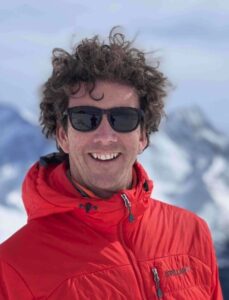 Rik
 Rik
 Emma
 Rob
 Iain
 Cass
 Mike
 Abbie