

Your son or daughter wants to spend a winter in the mountains and come home a qualified instructor. Depending on the day, that is either the best idea they have ever had or a very expensive way to break a leg.
This is the version we would want if it were our own. It is not a brochure. Where the honest answer is unwelcome, you will find the unwelcome answer. Written for any family considering a season, whoever they end up booking with.
Inside the guide
Ten Chapters. No Brochure.
1What this actually is
2Who it suits
3The season, week by week
4Where they live
5The money, in full
6Earnings, honestly
7Visas and insurance
8Safety on a mountain
9Homesickness
10What it is worth afterwards

5
months
A typical season, late November to early April.
2–3
weeks of training
Before the Level 1 exam. The rest is the job.
Week 3
the wobble
When homesickness usually arrives. It is normal and it passes.
Chapter 1
What This Actually Is.
A professional qualification, followed by a job.
The thing to understand first is that this is not a holiday with lessons attached. The people who arrive expecting the latter tend to have the worst time.
In Canada the two governing bodies are the CSIA for skiing and CASI for snowboarding. Both are internationally recognised and both run a ladder of four levels. A Level 1 certifies someone to teach beginners through to intermediate. Level 2 is the level most snow schools worldwide actually want. Levels 3 and 4 take years and belong to career instructors.
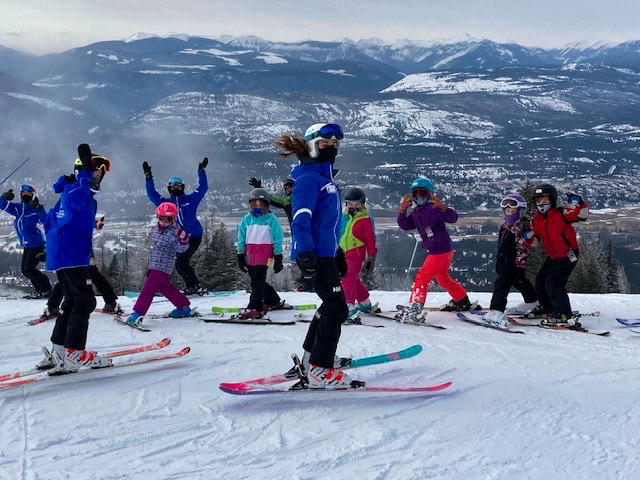
A first season usually means arriving, training for two or three weeks, sitting a Level 1 exam, then teaching real paying guests for the rest of the winter. Often those guests are five years old and would rather be indoors. That is the job.
The certification itself does not expire. Membership of the governing body is renewed annually, and that fee sits with your son or daughter for as long as they want to stay current.
If they are going abroad anyway
Plenty Of Jobs Give Them A Winter. One Gives Them A Qualification.
All of them are honest work. Only one sends them home with an internationally recognised professional qualification and a season of being responsible for other people's children.
Give them the certificate. Give them the responsibility. Most parents tell us the same thing afterwards: they came back different.
Handed over in about 3 weeks.
The moment the course becomes a job.

Chapter 2
Who It Suits, And Who It Does Not.
The ability bar is lower than you think. The temperament bar is higher.
A confident intermediate who can link parallel turns down a blue run has enough to start. Nobody needs to ski off piste and nobody needs to be fast. The training is designed to take a competent skier and make them a teacher.
What it genuinely asks for is someone who can be cheerful at eight in the morning in poor weather, take direct feedback without sulking, and spend a lot of the winter on a nursery slope rather than the summit.
Honest signs somebody is not ready
They cannot ski a blue run in control. They have never held a job. They are going mainly because a friend is going. They are hoping a season will fix something a season will not fix.
None of those are permanent conditions. All of them are worth another year.
Age matters practically rather than legally. Eighteen is common and works well. A quiet seventeen year old flying to a small mountain town for five months is a bigger step, and worth an honest conversation rather than an optimistic one.
Chapter 3
The Season, Week By Week.
Late November to early April, in four acts.
Weeks 1 to 3
Arrival, paperwork, kit and intensive training. Long days on snow, early starts. Exhausted and exhilarated in roughly equal measure.
The exam
Assessed by an examiner from the governing body, not their own trainer. Resits are usually possible, though rarely free and not always at the same resort.
Christmas
The busiest fortnight of the winter. Thrown in at the deep end. Also the worst possible fortnight for a family visit.
January to April
The real job. Lessons, days off, steady improvement. The season stops being a course and becomes a life.
A normal working day is an early start, a morning lesson, a break, an afternoon lesson and a tired evening. Hours are not guaranteed and vary with how busy the resort is.
Chapter 4
Where They Live.
Shared housing in a town built for winter.
Almost always shared accommodation, often with people they have never met, in a town built for winter and not much else. Rooms are shared. Kitchens are busy. Someone will snore.
Friction is normal and usually peaks around week four, when the novelty has worn off and everybody is tired. Most of it resolves itself. Where it does not, it needs raising with whoever is responsible in resort rather than left to fester.
Mountain towns are small. A supermarket, a handful of bars and a great deal of snow. For most people that is the appeal. For a few it is claustrophobic by February, and it is worth knowing which of those your son or daughter is likely to be.


Chapter 5
The Money, In Full.
Headline prices are close to useless for comparison.
Packages vary enormously in what they include. Before comparing two quotes, establish for each one whether it includes accommodation, a lift pass, training, exam fees, governing body membership, airport transfers, flights and equipment.
Almost never included
Flights, insurance, visa fees, food, going out, personal equipment and resits. Food and social life are the two families underestimate most, and resort supermarkets are not cheap.
Ask any provider directly what a realistic weekly spend looks like at that specific resort, then budget to the top of whatever range you are given. Nobody has ever regretted arriving with a buffer.
Understand the cancellation terms before paying anything beyond a deposit. They are usually a sliding scale, and the closer to departure the less is recoverable. That is precisely what cancellation insurance exists for.
Chapter 6
Earnings, Honestly.
Treat the first winter as the cost of entry.
Instructing does not pay well in a first season, anywhere in the world. Hourly rates for a newly qualified Level 1 are modest, hours depend on how busy the resort is, and quiet weeks mean quiet pay.
Anyone promising a season that pays for itself is being optimistic at best. A working season offsets some living costs. It does not usually return the investment inside one winter.
People do it anyway because of what it leads to: a qualification that travels, a second season at better rates, and in some cases a career.
Chapter 7
Visas And Insurance.
Two routes into Canada, and one rule that catches families out.
Training only
eTA
An Electronic Travel Authorisation, quick and inexpensive. It is not a work permit and nobody can be paid on it.
Working
IEC working holiday
Applied for personally. No agency can submit it on their behalf. Once in a lifetime for most nationalities, so worth using well.
The rule that catches families out
On a working permit, the length of the insurance policy sets the length of the visa.
Turn up with six months of cover and the permit is six months, whatever it could have been. It cannot be extended afterwards. If the intention is two years, the policy needs to run two years.
On insurance itself, three points matter more than price. An annual family travel policy will rarely cover a trip of this length, and most exclude an instructor course outright. Winter sports cover is an addition rather than a default, and some policies cap the number of ski days. And the terrain park is frequently excluded, which matters because that is exactly where a lot of young people spend their days off.
Get the cancellation and curtailment limits in writing. Cancellation covers not going at all and usually runs from the day the policy is bought. Medical cover starts on the departure date. Curtailment covers coming home early. Three different things with three different triggers.
Chapter 8
Safety On A Mountain.
Neither drama nor false comfort.
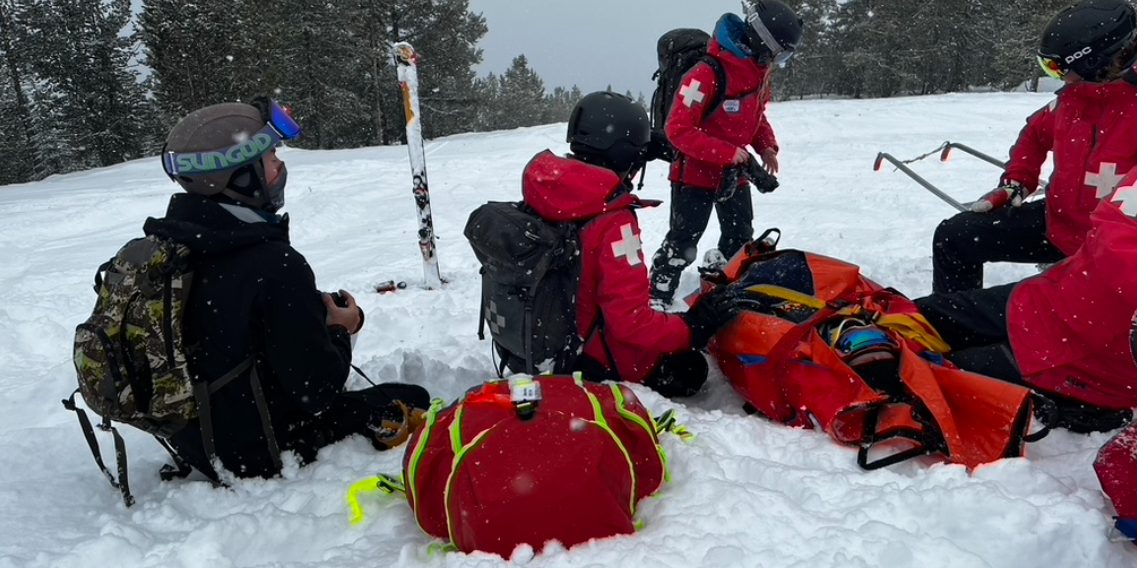
Skiing and snowboarding carry real risk and no amount of organisation removes it. Canadian resorts run professional ski patrol services and injured skiers are reached quickly and treated well. Serious injuries do happen and they end seasons. Most injuries, though, happen on days off rather than at work.
One rule above all others. Contact the insurer before seeing a doctor or attending hospital, except in a genuine emergency. Claims are refused for skipping that call.
Please pass this on: do not tough it out to save money
Every year, somewhere, a young person avoids a doctor because they are frightened of the bill. A knee looked at in week two is a fortnight off snow. The same knee ignored for a month can end a season.
Ring the insurer, get seen, keep every receipt. Insurers reimburse what is documented, including taxis to and from hospital.
Practical things that genuinely reduce risk: a helmet, always. Skiing within their ability rather than their ambition. Not riding alone in trees or out of bounds. Treating deep snow and tree wells with respect. And accepting that alcohol and an eight in the morning lift are a poor combination.
Assume that reps and resort staff are not an ambulance service and do not always have a vehicle free. For clinic and hospital trips, plan on a taxi both ways and keep the receipts.
Chapter 9
Homesickness And The Low Weeks.
It arrives around week three, and it passes.
The excitement of arrival has worn off, the training is hard, everyone is tired, and home suddenly looks very appealing. This happens to most people and it is not evidence that anybody has made a mistake.
What helps
Regular but not constant contact. A routine. Something to look forward to. Being told that feeling wobbly in week three is what happens to almost everybody.
What does not
Daily calls where the only topic is whether they are all right. Offering to fly them home on day nine. Solving problems they have not asked you to solve.
There is a difference between homesickness and something more serious. Persistent low mood, withdrawal from friends, not eating, not getting up: those warrant a proper conversation and, if needed, professional help. Reputable providers will have a route for raising a welfare concern, and it is fair to ask what that route is before booking.
One practical thing worth doing before departure: agree roughly how often you will speak. It saves a lot of misread silence in both directions.
Chapter 10
What It Is Worth Afterwards.
They return older, in the useful sense.
On paper, a recognised international qualification and a season of employment. In practice, something more useful: a nineteen year old who has taught strangers' children on a mountain, been assessed by a professional examiner, lived with people they did not choose, and managed their own money four thousand miles from home.
Universities and employers respond well to that, particularly when it is described properly rather than as a gap year. It is worth helping them write it up while it is fresh.
A good number go back. A second season pays better, the qualification ladder continues, and the southern hemisphere winter runs conveniently opposite. Some never really come home, which is either wonderful or alarming depending on the hour of the day.

Whoever you book with
Questions Worth Asking Any Provider.
Whether or not that is us, these separate a well run programme from a brochure. The answers should be specific. Vagueness is the tell.
Exactly what is included in the price, itemised?
Accommodation, lift pass, training, exam fees, membership, transfers, flights, equipment. In writing rather than in conversation.
How many days of training, and who delivers it?
A number, not an adjective. Ask what qualifications the trainers hold and who examines the course.
Is employment guaranteed, and with whom?
Employment is usually with the snow school rather than the course provider. Understand who the actual employer is, and what happens if a job does not materialise.
What does a realistic weekly living cost look like there?
A provider who has run seasons there will give you a range without hesitating. One who has not will change the subject.
Who is on the ground in resort?
Ask for the actual arrangement rather than a reassurance. A named person in resort is worth a great deal more than a head office phone number.
What happens if my son or daughter is injured?
Who rings you, how quickly, and who helps with the claim. Ask what happened the last time it occurred, because it will have occurred.
What is the route for raising a welfare concern?
A named person and a written policy, and it should not depend on your son or daughter being the one to raise it.
What are the cancellation terms, in writing?
Including what happens if a visa is refused through no fault of their own, or the course is changed or cancelled by the provider.
May I speak to a parent whose child went last season?
The most useful question on this list. A confident provider will arrange it. Independent review sites are the next best thing.
Things Worth Being Wary Of.
Pressure to decide today
Seasons are planned months ahead. A discount that expires this afternoon is a sales technique, not an opportunity.
Guaranteed pass rates
No provider examines its own candidates. Nobody can guarantee an outcome they do not control.
Vagueness about the employer
Work in Canada requires a permit and a real employer. If nobody will name the employer, ask again.
Earnings projections
Hours are not guaranteed and depend on how busy the resort is. Anyone quoting a season income is guessing.

This guide is general information for families considering a ski or snowboard instructor season. It is not financial, insurance, immigration or medical advice, and requirements change. Always verify current visa and insurance requirements directly with the relevant authority and provider before booking.


 Emma
 Rik
 Rik
 Emma
 Rob
 Iain
 Cass
 Mike
 Abbie