
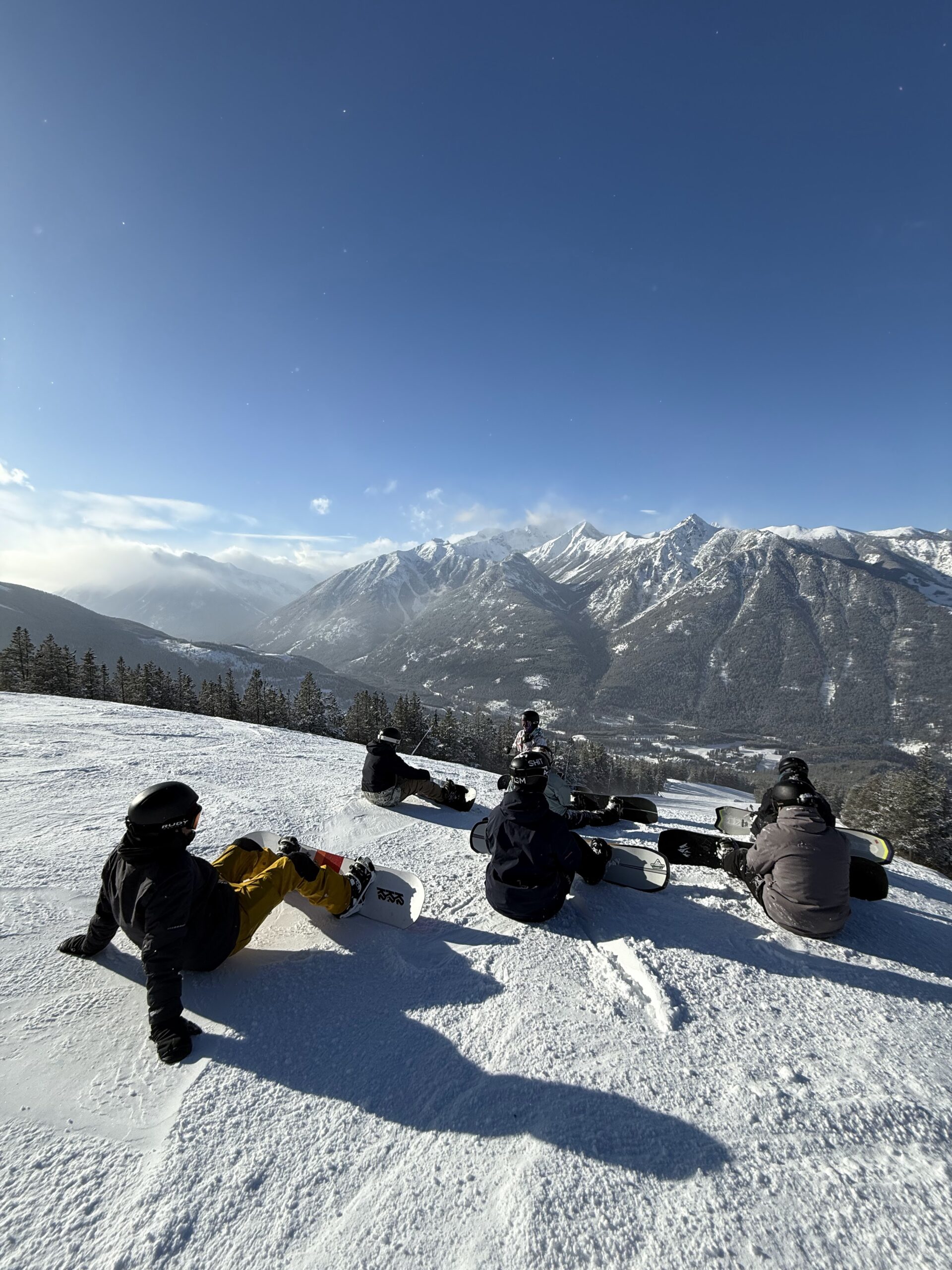
How The CASI System Works.
CASI is the national body for snowboard instruction in Canada. Four instructor levels, a parallel two-level Park stream, and a structure that differs from the ski side in ways worth understanding before you book anything.
Certifications
Four instructor levels plus Park 1 and Park 2. The park stream is not a side quest. See below.
Level 1 course
A minimum of eighteen hours including evaluations. Riding and teaching both assessed, both must pass.
Teaching between 1 and 2
CASI recommend about 45 hours of real teaching before you attempt Level 2. On an internship you get those hours. That is the whole point.
Update, not just dues
To stay current at any level you complete an online training update every year as well as paying your membership.
The honest version
A CASI Level 1 is a real qualification and it will get you hired in Canada. It certifies you to teach beginner snowboarders up to what CASI calls the Novice Turn level, which in practice means first-timers, children, and a lot of time on the magic carpet. Level 2 is where the better lessons and the pay rise live. Anyone telling you Level 1 alone is a career is selling you something. For the whole route in one place, read how to become a snowboard instructor.
For more on the body itself, read our CASI qualifications page, and get ready for the next step with our CASI Level 2 prep guide. To start training, see our snowboard instructor courses in Canada.
The Pathway, At A Glance.
Durations are CASI's own published course lengths. From Level 3 upward the course and the exam are separate events, which is the biggest structural difference from the ski side.
Level 4's three modules, being Riding, Teaching and Instructor Training, can each be done separately, and each is the prerequisite for examining that component. Prep courses of one and two days exist for Levels 3 and 4, giving you the exam format and honest feedback before you commit the money.
For career minded riders
For Career Minded Riders, Park 1 Is Not Optional.
This is the single biggest difference between the snowboard and ski pathways, and the thing boarders discover too late. On the ski side the park stream is an alternative route. On the snowboard side it is a gate.
CASI Level 3 requires Level 2 and Park 1 certification. Not one or the other. If your long game is Level 3, Park 1 is a mandatory step and there is no way round it.
It is also only two days and twelve hours, so it is the cheapest and quickest certification on the whole ladder. CASI themselves suggest taking it while you are preparing for Level 2. Do it early, in your first season, while you are already out there and already riding every day. Coming back for it later is a much more expensive way to tick the same box.
3 days · 18 hours
Park 1 Instructor
Teaching beginner and novice freestyle using CASI's Freestyle Fundamentals, on small features. You need Level 1 first, and you should be genuinely comfortable in the park before you turn up.
The mandatory riding tasks
Ollie, well executed, landing on two feet
50-50 with a variation on a small box: nose or tail press, shifty
180 frontside and 180 backside on a small park jump
Straight air with a variation: grab or shifty
Nose or tail press with a variation
3 days · 18 hours
Park 2 Instructor
Intermediate freestyle on medium features. Park 1 is the prerequisite. This one is a genuine choice rather than a gate, take it because park teaching is where you want to be, not to tick a box.
What gets assessed
Straight airs with multiple variations on medium and large jumps, absorbing landings through the legs
Rotations. Full 360s off both edges, in multiple directions
Rails and boxes. 50-50s and boardslides with variations on small and medium features, including presses and controlled rotation on, across and off

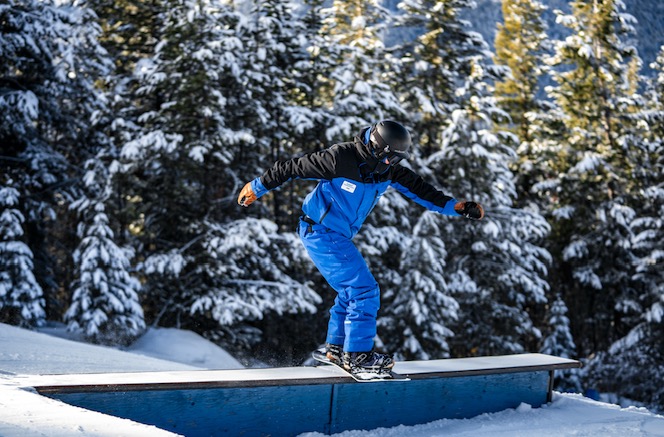
CASI publish the feature sizes they expect: small jumps of roughly two to three metres from lip to knuckle, and boxes or rails three to five metres long. That is deliberately modest. Park 1 is about teaching freestyle safely, not about your own trick list.
Level By Level, In CASI's Own Words.
Prerequisites, riding tasks and how you are actually marked, taken from CASI's published course guides. Both riding and teaching must pass, at every level.
An introductory certification giving you the basic tools to teach beginner and novice snowboarding. Beginner teaching methods, basic snowboard technique, lesson planning and communication. You get coaching on your riding and feedback on your teaching, and you leave with a development plan.
Prerequisites. Fourteen on day one, and intermediate riding: able to link controlled, medium-radius sliding turns on groomed green and blue terrain. This is not a learn-to-ride course.
Assessment is an ongoing practice and feedback model rather than a single sit-down exam, with a final overall assessment plus the mandatory riding tasks. Riding is marked on the three Core Competencies: a centred and mobile position, turning with the lower body, and balance along the working edge.
The mandatory riding tasks
Intermediate sliding turns, medium radius on groomed
Beginner turns, forward and switch, both directions
Hopping through turns, hopping in the traverses
Open carved turns, heel and toeside, pencil-line traverse on green
An intermediate certification building a skills-based teaching approach for intermediate snowboarding, plus a real understanding of CASI technique and methodology. Pass it and you get the higher-end lessons and, depending on your resort, a pay rise.
Prerequisites. Level 1 or a foreign equivalent, sixteen on day one, and intermediate to advanced riding: controlled medium and small radius sliding turns on groomed green, blue and black, plus linked carved turns and basic switch turns on green.
The riding standard in plain terms. You need to carve, leaving a pencil line in the snow, and make short-radius turns on black runs. CASI recommend at least forty to forty-five hours of actual teaching as a Level 1 before you attempt it. That is not a formality; the teaching mark assumes you have stood in front of real students.
The four mandatory riding tasks
Intermediate carved turns, linked pencil lines on green or mellow blue
Novice turns, forward and switch, in beginner terrain
Short radius sliding turns on black or steep blue groomed
Ollies from a flat base on green terrain
Refinement level. Advanced all-mountain riding, teaching advanced students across groomed, freeride and park terrain, and, new at this level, training other instructors. The course and the exam are separate bookings.
Prerequisites. Level 2 and Park 1. Both. Advanced all-mountain riding with speed and control on groomed and ungroomed green, blue and black, linked carved and switch turns, and genuine comfort on small and medium park features. CASI recommend around two hundred hours of teaching first.
Three separate components. A thirty-minute advanced skill development lesson; a task-based riding evaluation across medium radius turns forward and switch, large and short turns on groomed, and short turns on ungroomed; and a twenty-minute basic instructor training session.
Riding is no longer marked on the Core Competencies alone. Level 3 introduces the Advanced Competencies: strength and flow, arc to arc, loading and deflection, and steering versatility. That is a different conversation about your riding, and it is where most people find the gap.
Expert all-mountain riding on everything up to double black, mastery of lesson structure, and the confident training of experienced instructors. Three modules of three days, being Riding, Teaching and Instructor Training, then a four-day exam. Each module can be taken separately and each is the prerequisite for examining its own component.
Prerequisites. CASI Level 3. Unlike every level below it, a foreign equivalent is not accepted here. Around four hundred hours of teaching is recommended, along with Evaluator training and experience running Level 1 courses.
CASI also value experience from outside their own system at this level: coach training, NCCP theory, avalanche training, competition experience, resort management, risk management. By Level 4 the question is not just whether you can ride, it is whether you can run things.
Be realistic about the jump
Level 3 Is A Second-Season Goal. At The Earliest.
We are blunt about this on the ski side and we need to be blunter here, because CASI Level 3 is harder to reach than its ski equivalent.
Two certifications first
Level 2 and Park 1
You cannot arrive at Level 3 with Level 2 alone. That is a whole extra certification to fit into a season the skiers do not have to find room for.
Several seasons recommended
Real teaching time
CASI describe Level 3 as a course for instructors with multiple years of teaching. A first season on a busy snow school will not usually get you there, and the teaching mark shows it when you have not.
Nine days in total
Modules plus exams
Three 2-day modules, then a separate 1-day exam for each of riding, teaching and instructor training. Three components, three ways to come up short.
What we actually recommend
Season one: Level 1, then Level 2, then Park 1 if you can fit it. That is a full, honest winter's work and it leaves you genuinely employable. Trying to bolt Level 3 onto the end of it is how people end up paying twice.
Season two: teach properly, then attempt Level 3. If Level 2 is your degree, Level 3 is your master's. It needs the hours behind it, and plenty of people get part of it in their second season and finish it in their third. That is normal, not failure.
Anyone promising you a snowboard Level 3 on a fixed timetable is guessing.
Where Snowboard Training Runs.
Snowboard internships do not run everywhere we run ski programmes, so this is worth checking before you get attached to a resort.
Training days are on top of your own riding time and your working shifts, they are structured, coached sessions with a trainer, not free skiing. Your schedule is the final word on exact day counts, and if snowboarding is what you want, talk to Emma early rather than assuming a resort runs it.
Membership, Fees And Resits.
CASI set and publish their own fees and they move every year. These figures were current at the time of writing and are in Canadian dollars, always check a live CASI page before you budget.
Level 1
CA$553 – 608
Early price to regular price. Retest CA$167 – 184.
Register early. The difference between the early and regular price is real money, and a late registration adds a further fee on top.
Level 2
CA$695 – 764
Early price to regular price. Retest CA – 67 – 184.
Lift tickets and taxes are not included in any CASI course fee. Budget for those separately.
If you have to resit
Riding and teaching are marked separately. Fail one and you resit that component, not the whole course. That is a genuinely fair system and it keeps the cost down.
Two ways to do it. Retest during a regular course, on a Level 2, riding retests run on the first two days and teaching on the second two. Or register for a standalone one-day Retest Day.
It may not be at your resort. This is the part people do not think about. If the next available retest is at another mountain, you are paying for transport, a night or two of accommodation and the retest fee on top. That turns a CA$170 retest into a considerably more expensive week.
Resit costs are yours, not ours. Cancelling a paid registration also carries an administrative fee.
Membership
We cover your CASI membership at Level 1 only. If that is what you are coming out to do, it is handled and we will tell you exactly when to register.
Above Level 1 it is yours. If you arrive already holding a Level 1 and are going for Level 2, it is your responsibility to make sure your CASI membership is current before training starts. Not on the day. Before.
Staying current is not just dues. CASI require an annual online training update as well as your membership fee, at every level. Miss the update and you are not current, whatever you have paid.
Members get free on-snow professional development sessions each year. They are worth turning up to.
If you want a career, not a gap year
Collect Tickets, Fast.
Here is the honest career advice for snowboarders, and it is not what most people expect. A CASI ladder alone is a slow way up. The boarders who get ahead in this industry are the ones who arrive back for season two holding more than one thing.
The reason is simple: snowboard lessons are a smaller share of a snow school's book than ski lessons. More tickets means more of the timetable you can be put on, which means more hours, better lessons and a better rate.
If this is a gap year, ignore all of this and go and enjoy your winter. Get your Level 1, teach, ride powder, have the season. It is a completely legitimate choice and we would rather you loved it than collected certificates you did not want.
CASI Park 1
Two days, mandatory for Level 3 anyway, and it puts you on park lessons immediately. The highest return of anything on this list.
CADS
Adaptive instruction. A genuinely rewarding qualification, a specialism most schools are short of, and it makes you useful in a way very few first-season instructors are.
CSIA Level 1
Yes, on skis. Dual-certified instructors get put on far more of the timetable, and it is the difference between quiet weeks and full ones.
Watch, Read, Register.
None of it is compulsory before you arrive. All of it makes week one easier. The Standards Videos are the single most useful thing on this page.
Video
The Standards Videos
CASI publish a riding standards video for every level on their YouTube channel. Watch the Level 1 one, then watch it again next to a mirror of your own riding. It is the clearest possible answer to "am I good enough yet".
Members only
Course guides and e-prep
Each level has a Course Guide and online prep workshops, alongside the CASI Reference Guide. CASI list completing the e-prep workshops as a preparation step in its own right, so it is not optional reading in spirit.
Practical
Courses and prep sessions
Every CASI course is booked through CASI, not through your resort. Prep courses of one and two days exist for Levels 3 and 4 and give you the exam format plus honest feedback beforehand.
Straight Answers.
The questions boarders actually ask, answered honestly rather than helpfully.


 Emma
 Rik
 Rik
 Emma
 Rob
 Iain
 Cass
 Mike
 Abbie