
Qualifications
How to Become a Snowboard Instructor
One three-day course gets you teaching. A winter of practice gets you hired. Here's the whole route, step by step, with the real costs and timings for Canada.
In short
- To teach snowboarding in Canada you need CASI Level 1. It's a three-day course, with your riding and teaching assessed as you go, and it lets you teach beginners.
- You need to be a solid intermediate rider first: linking controlled turns on blue runs, in control at speed.
- Level 2 is the one snow schools want. Most people get there in one winter, on a nine week course or a season-long internship.
- To be paid in Canada you need a working holiday permit. On a UK passport that's open to 18 to 35 year olds.
Written for gap year students, career changers and parents doing the research.
Courses that fit this article
How Do You Become A Snowboard Instructor, Step By Step.
There's no university course and no single gatekeeper. In Canada the qualifications come from CASI, the Canadian Association of Snowboard Instructors, and the route looks like this.
Get your riding to a solid intermediate.
Linking controlled turns on blue runs, stopping on either edge, riding in control at speed. If you're not there yet, a week or two of lessons first will save you money later. Our snowboarding ability guide shows the standard.
Pass CASI Level 1.
Three days, at least 18 hours, with your riding and teaching assessed as you go. Pass and you can teach beginners. It's the minimum level Canadian snow schools hire at.
Teach.
Real lessons with real beginners. CASI recommends about 45 hours of teaching before Level 2, and it's the part that turns a good rider into a good instructor.
Pass Level 2, and add Park 1.
Level 2 lets you teach riders up to intermediate, and it's the level most snow schools want. Park 1 lets you teach on small terrain park features, and you'll need it before Level 3.
Work a season.
With Level 2 and a winter of teaching behind you, you're employable in Canada, and you've built the base for Level 3 in a later season.
What Are The CASI Snowboard Levels.
CASI has four instructor levels and a separate park stream. Here's what each one means in practice.
| Level | What you can teach | Course | You need first |
|---|---|---|---|
| Level 1 | Beginners, up to their first linked turns | 3 days, at least 18 hours | Solid intermediate riding |
| Level 2 | Riders up to intermediate, on more of the mountain | 4 days, at least 24 hours | Level 1, aged 16, riding advanced and ungroomed terrain |
| Park 1 | The basics on beginner park features | 3 days, 18 hours | Level 1 |
| Level 3 | Advanced riders, plus training new instructors | Three 2-day modules, then three 1-day exams | Level 2 and Park 1 |
| Level 4 | Expert riders and other instructors | The top level, taken by very few | Level 3 |
Source: CASI course pages, checked 1 November 2026.
If you book directly with CASI, Level 1 costs $552.98 CAD early or $608.28 regular, plus your lift ticket, and Level 2 is $694.97 to $764.47. On our courses the CASI training and exam fees are included. Each year you also pay CASI membership and complete a short online update to keep your level current.
Two things catch people out. Level 2 is where the better lessons and more hours start, so don't plan a career on Level 1 alone. And Park 1 isn't optional if you want Level 3, so it's worth getting early. Our CASI qualification guide covers every level in more detail.
Your season
You won't do it alone.
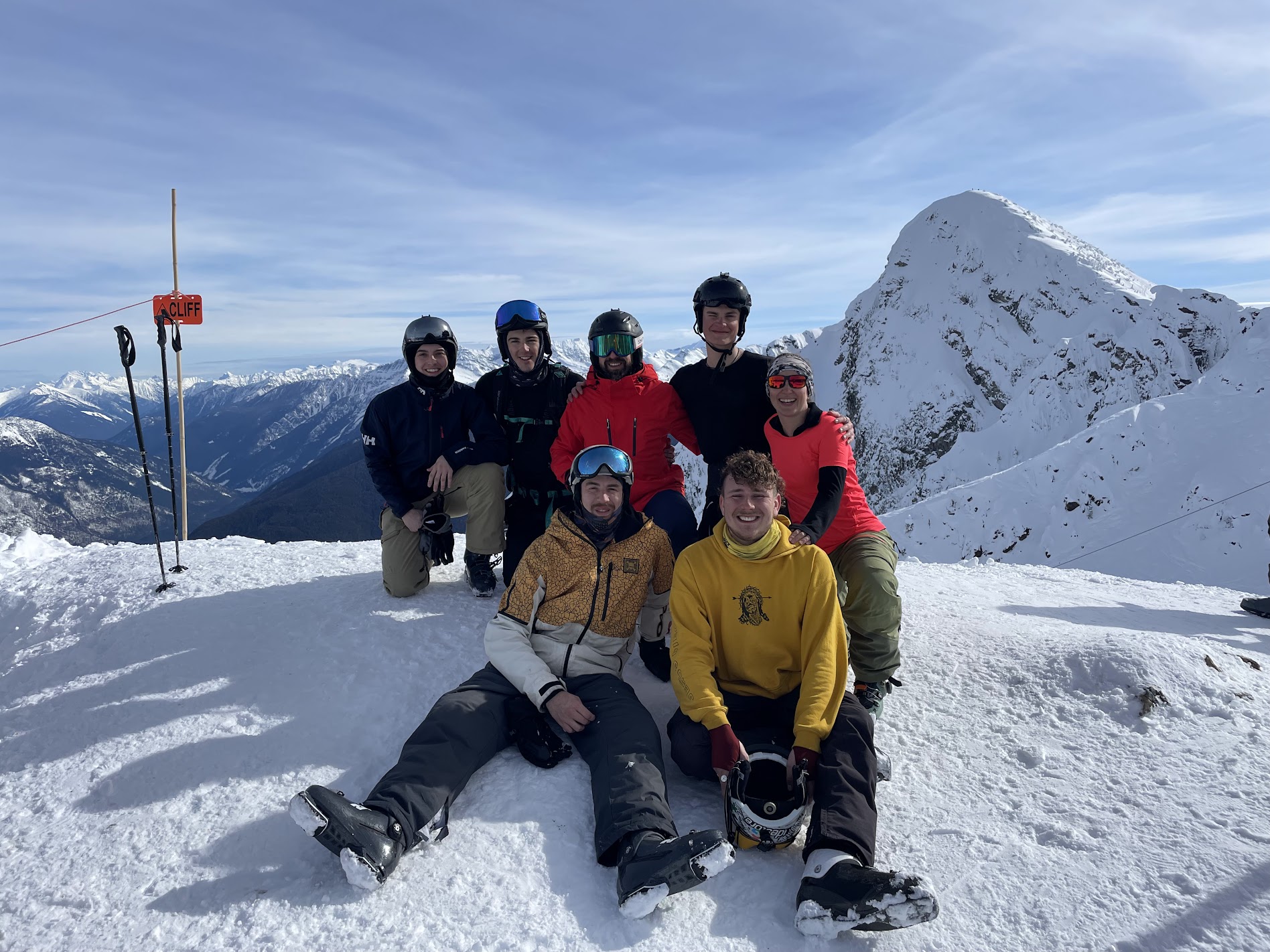
You train in a small group, and that group becomes your practice class, your cheerleaders and your mates for the winter.
How Good Do You Need To Be At Snowboarding.
Better than most beginners, but not as good as you fear. CASI asks for comfortable, safe riding on intermediate terrain for Level 1. In practice that means linking turns toe to heel on a red run in Europe, which is roughly a blue in Canada, at a decent speed and in control.
You don't need big jumps or race-style carving. You do need to be steady and repeatable, because evaluators want to see the same good turn every time, not one great one. You also need to ride switch, your less natural way round, well enough for beginner turns, because it's part of Level 1. Practise it before you go.
Riding is only half the mark. Your teaching is the other half, and you need to pass both. The good news is that teaching is far quicker to learn than riding, and you'll practise on your own group before you ever meet a real beginner.
Most people need three to four weeks on snow before a Level 1 course, and about six before an internship. If you're not sure where you stand, film yourself on a blue run and send it to us.
How Long Does It Take, And What Does It Cost.
The qualification itself is quick. Getting good enough to be hired, and to pass Level 2, takes a winter. These are the ways to do it with us.
| Route | How long | You finish with | From |
|---|---|---|---|
| Level 1 course, Panorama | 4 weeks, 25 November to 21 December 2026 | CASI Level 1 | £4,700 |
| Level 1 Only, Revelstoke | 3 weeks, January 2027 | CASI Level 1 | £4,000 |
| Level 1 and 2 Intensive, Revelstoke | 9 weeks, from 7 January 2027 | CASI Level 1 and 2 | £6,850 |
| Snowboard Instructor Internship, Panorama | 19 to 23 weeks, winter 2027/28 | CASI Level 1, 2 and Park 1, plus a paid snow school job | £6,950 |
| Level 1 and Job Placement, Nova Scotia | Full winter, 2027/28 | CASI Level 1, then 8 weeks of paid teaching | £4,900 |
Source: The Winter Sports Company course pages, November 2026. Check each page for what's included.
Course fees include your CASI training and exams. Flights, insurance, kit and most of your food are extra. Our free guide, The Real Cost of a Canadian Season, adds it all up line by line.
So which is fastest? Level 1 in three weeks at Revelstoke, in January. Which makes you employable? Level 1 and 2 in one winter, ideally with real teaching hours in between, and that's exactly what an internship gives you.

Under a minute of one of our reps riding Revelstoke's trees. Everyone starts on the beginner slope. This is where it can lead.
"What Winter sports has set up is brilliant... with the fantastic Pano instructors, you will never not feel supported."
How Do You Get A Job As A Snowboard Instructor.
Level 1 is the minimum Canadian snow schools hire at, and Level 2 makes you much easier to place. Here's what else they look for.
- The right to work in Canada. For UK citizens that's the International Experience Canada working holiday permit, open to 18 to 35 year olds. It's a lottery with a quota. The 2026 season is closed and the 2027 pools haven't opened yet, so apply as soon as they do.
- Christmas and New Year. Every snow school is at its busiest then, and many make holiday availability a condition of the job.
- Happy to teach children. A lot of your first lessons will be kids, some as young as three.
- A recent criminal record check. Revelstoke Mountain Resort, for one, asks for a check less than three months old.
- Reliability. Turning up on time, every day, in every weather, matters more than your best trick.
Be honest with yourself about one thing: more people ski than snowboard, so snowboard instructors often get fewer hours. In the Canadian Ski Council's last published count, 7% of Canadians aged 12 and over skied and 3.9% snowboarded. That's older data, from 2014/15, but it's why Park 1, a second discipline and being great with kids all help you get more work. It's also why our snowboard internship includes Park 1.
Snow schools pay by the hour and by level. Cypress Mountain near Vancouver, for example, advertised $19 an hour at Level 1, $22 at Level 2, $25 at Level 3 and $32 at Level 4 for winter 2025/26. There's more in how much ski and snowboard instructors make.
The simplest way into a job is an internship, where the job is part of the package. On our snowboard instructor internship at Panorama you train, pass Level 1, then work for the resort's snow school while you train for Level 2 and Park 1. Our guide to visas for instructor courses covers the permit in more detail.
Can You Teach Snowboarding Outside Canada.
Yes, but every country has its own system, and a Canadian Level 1 won't get you a job everywhere.
In the UK the governing body is BASI. BASI Level 1 lets you teach on indoor snow slopes and dry slopes in the UK, and you can take it at home or abroad. It's a sensible first step if you want to teach in Britain, but Canadian snow schools hire on Canadian qualifications.
If you want to work anywhere in the world, aim for the ISIA stamp. CASI members can get it once they hold Level 3, plus Avalanche Skills Training, first aid and 320 hours of recognised training. That's a few winters away, but it's where a snowboard career really opens up. More in are the instructor qualifications internationally recognised.
And if you'd rather train in the southern winter, we also run snowboard instructor courses in New Zealand.
Questions We Get Asked.
How old do you have to be to become a snowboard instructor?
CASI's minimum age is 14 on the first day of a Level 1 course and 16 for Level 2. To be paid as an instructor in Canada on a UK passport you need a working holiday permit, which is open to 18 to 35 year olds.
Do you need to be able to ride switch?
Yes. For Level 1 you need basic beginner turns riding switch, your less natural way round. You don't need to ride it fluently, but practise before your course, and you'll get coaching on it during your training.
Can you fail CASI Level 1?
Yes. Your riding and your teaching are each worth half the mark, and you need to pass both. If you miss one part, you can retake just that part within two years, so you don't start again from scratch.
How much do snowboard instructors earn?
In Canada, snow schools pay by the hour and by level. New Level 1 instructors usually start a little above the minimum wage, which in British Columbia is $18.25 an hour, and pay rises with each level you pass. How many hours you get matters as much as the rate.
Can I do it on a gap year or a career break?
Yes. A full winter fits neatly into a gap year, and career changers and people on a career break train with us every season. If you're over 35, you can still qualify, but paid work in Canada needs a different visa route from the working holiday permit.
Do I need a visa to teach snowboarding in Canada?
To be paid, yes. UK citizens aged 18 to 35 can apply for an International Experience Canada working holiday permit. It's a lottery with a yearly quota, and the 2027 pools haven't opened yet. If you only want to train and qualify, the rules are different, and our post on visas for instructor courses explains them.
Sources
- CASI, "Level 1 Instructor", checked 1 November 2026. https://casi-acms.com/index.php/courses/level-1-instructor
- CASI, "Level 2 Instructor", checked 1 November 2026. https://casi-acms.com/courses/level-2-instructor/
- CASI, "Park 1 Instructor" and "Level 3 Instructor", checked 1 November 2026. https://casi-acms.com/courses/level-3-instructor/
- CASI, "Level 1 Course Guide 2023-24". https://casi-acms.com/documents/Level%201%20Course%20Guide%20.pdf
- CASI, "International Membership", checked 1 November 2026. https://casi-acms.com/international-membership/
- Government of Canada, "New arrangement expands work opportunities for Canadian and British youth", 14 July 2023, and "Work and Travel in Canada with International Experience Canada", updated 21 October 2026. https://www.canada.ca/en/immigration-refugees-citizenship/services/work-canada/iec/
- go2HR, "Ski/Snowboard Instructor" career summary, updated 19 April 2023, and Cypress Mountain job listing, 11 June 2025. https://www.go2hr.ca/job-board/ski-snowboard-instructor-winter-2025-26-2
- Revelstoke Mountain Resort, "Snowboard Instructor Level 1" job listing on jobs.ca. https://www.jobs.ca/job/7fa79fe9-2265-4e44-8e2c-04f8d0b3960a
- Canadian Ski Council, "Facts and Stats 2014-15". https://www.skicanada.org/wp-content/uploads/2016/01/2014-15-Facts-and-Stats.pdf
- BASI, "About BASI". https://basi.org.uk/about
- Government of British Columbia, "B.C.'s minimum wage increases to $18.25, June 1", 26 May 2026. https://news.gov.bc.ca/releases/2026LBR0021-000581
Was this useful?
Thanks. That helps us decide what to write next.

Written by


 Emma
 Rik
 Rik
 Emma
 Rob
 Iain
 Cass
 Mike
 Abbie