
Soft bags, never hard cases
They fold away to nothing once you arrive.
Heavy things in your boots
Hand luggage is usually policed by size, not weight.
Documents in the cabin
Never in the hold. Not even once.
By Rik Dyson, Director, Winter Sports Company · Last updated
This is not a fortnight in Spain. You are moving to the mountains for a whole winter, and the people who arrive relaxed started eight weeks out rather than the night before.
Duct tape, a multi-tool, a plug adapter and a good book will fix most problems a season throws at you. The rest of this guide is the stuff people forget, the stuff they wish they had left at home, and how to get it all there without paying the airline twice.
Canada, the Alps, Japan or New Zealand: the list is mostly the same. What changes is how cold and how wet it gets, so start with where you are going.
Inside
1 Where you are going changes the list
2 The countdown
3 Getting it there
4 The checklist
5 The bag for the bag that does not arrive
6 Documents and money
7 The things people always forget
8 Leave room for the trip home
9 What not to do
The questions people actually ask
1
Packing For Canada, The Alps And Beyond
Cold and dry, or mild and wet. Pack for the one you are getting.
A season in inland Canada and a season in the Alps need broadly the same kit, but not the same balance. Canada is much colder than Europe, so warmth comes first. Coastal resorts are wetter, so waterproofing comes first. Here is the short version.
| Where | What to expect | Pack with this in mind |
|---|---|---|
| Canada, inland | Interior British Columbia and the Rockies. Dry, light snow and properly cold. Minus twenty is not unusual and some days go colder. | Warmth first. A serious down jacket, good gloves, a balaclava, hand warmers. Heated socks if you run cold. |
| Canada, west coast | Coastal mountains near the Pacific. Milder, but much wetter. Heavy snow up top, rain at the base is common. | Waterproofing first. A high-rated shell, spare gloves so one pair can dry, synthetic insulation that copes with damp. |
| The Alps | Generally milder than Canada, with more sunshine and bigger swings between cold mornings and warm afternoons. | Layers you can shed. Venting, lighter mid layers, and serious sun protection from February onwards. |
| Japan | Famous for heavy, frequent snowfall. Cold and often damp, with a lot of time spent in falling snow. | A good hood, waterproof everything, spare goggles or a low-light lens. |
| Southern hemisphere | New Zealand and Australia, roughly June to October. Changeable, often windy, milder overall. | A windproof shell, sun protection and layers for four seasons in a day. |
Electrics are not the same everywhere either
Canada, the USA and Japan use Type A and B plugs on low voltage. Most of Europe uses Type C and F, Switzerland has its own Type J, and New Zealand and Australia use Type I.
Chargers labelled 100 to 240V are fine anywhere with the right adapter. Hairdryers, straighteners and anything with a heating element often are not.
Cover your face on the lift
Once it drops to around minus eighteen in Canada, exposed skin gets serious quickly. We have seen frostnip and frostbite on cheeks, noses and ears from a single chairlift ride without face cover, because you are sitting still in the wind with nothing generating heat.
A buff, snood or balaclava is not optional kit. Pull it up before you get on the lift, not halfway up.
2
The Countdown
Five checkpoints, so nothing lands all at once
8 weeks
Start getting fit and sort your insurance, including winter sports cover. If you need a visa or work permit, check where your application is. Order a multi-currency travel card if you want one, as some take a week or two to arrive.
6 weeks
Kit check. Lay out what you already own and work out what is genuinely missing. Buy the important things now, boots and outerwear especially, rather than in a panic the week you fly.
4 weeks
Gather your documents on paper and digitally. Start wearing your boots, ideally on a dry slope or indoor snow centre rather than the living room.
2 weeks
Do a full practice pack and weigh it at home. Reorganise if you are over. Load some local currency onto your card and make a small test payment.
Night before
Documents, medication and chargers in your hand luggage, never the hold. Charge your phone, battery pack and laptop. Set two alarms.
3
Getting Your Ski Kit There
Soft bags, heavy things in the cabin, and weigh at home
The one decision that changes your whole season
Soft luggage is king.
Soft, squashable bags. Never rigid suitcases. They survive the transfer van, wedge into a small shared room and fold down to nothing once you have unpacked, instead of eating a third of the floor all winter.
A hard shell case is a beautiful thing at the airport and a nuisance from the moment you arrive. Your housemates will thank you.
Hand luggage is usually limited by size, not weight
Many airlines police the size of your cabin bag far more closely than its weight, though some do weigh it, so check yours. Where you can, put the dense, heavy things in the cabin and keep the hold for bulky, light things.
Your ski boots are storage
A pair of boots is a hollow, padded box. Fill them with socks, base layers, chargers or anything heavy and small. Boots carried as hand luggage, or in a boot bag, often free up a surprising amount of checked weight.
Check the sports equipment allowance
Airlines vary hugely. Some carry a ski or board bag free, some count it as a checked bag, some charge a flat fee. Book it with your flight, not at the desk, where it is always more expensive.
Pack the ski bag properly
Strap skis together, protect the edges and tips, and use jackets and trousers as padding. It keeps the kit safe and saves space in your other bag. Most airlines have a weight limit on sports bags too, so do not overdo it.
Weigh everything at home
Excess baggage at the airport is the most expensive way to carry anything. A cheap luggage scale pays for itself the first time you use it.
Mark your bags
Your ski bag will look identical to forty others on the carousel. Bright tags, ribbon or tape make yours obvious, and a small tracker in each bag turns lost luggage from a crisis into an inconvenience.
4
The Ski Season Packing Checklist
Tick as you go, or print it and tick it by hand
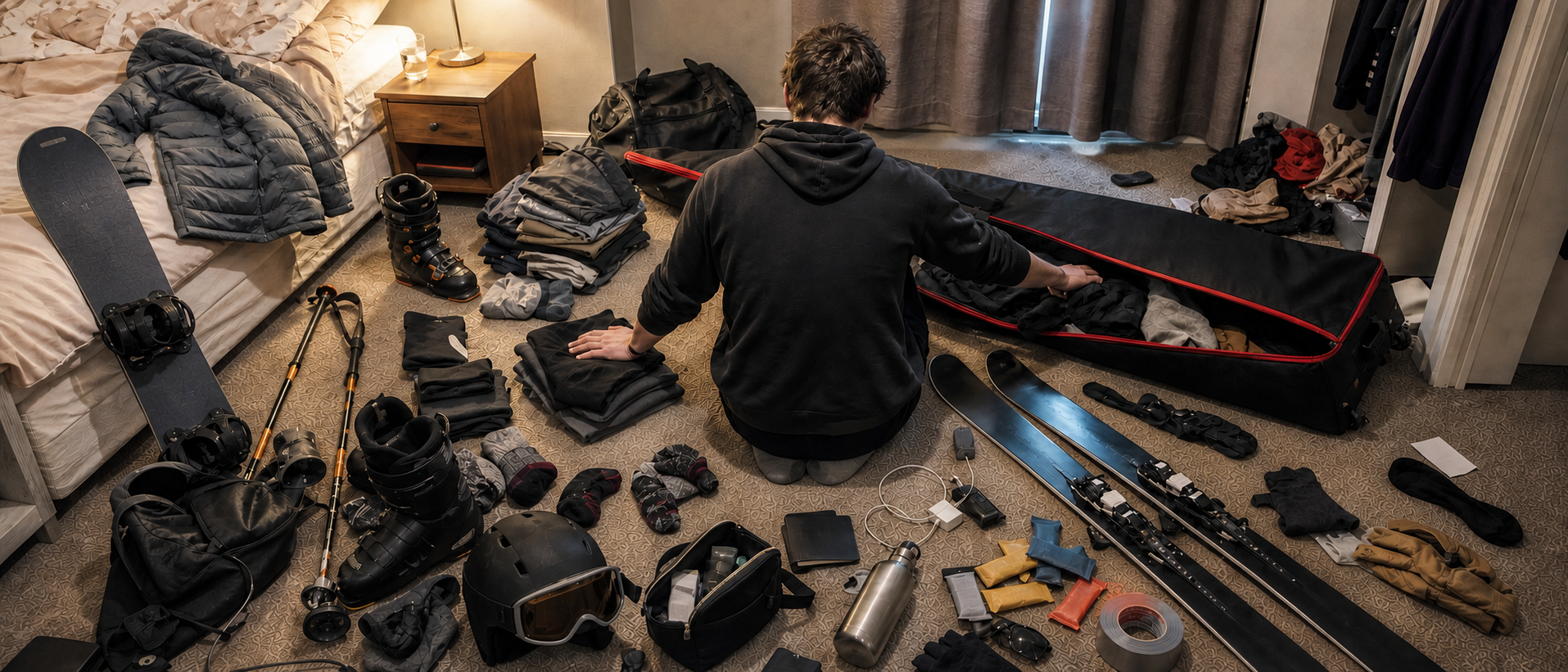
Your biggest headache will be overdoing the clothes
You will live in your ski gear and your boots. The going-out wardrobe can mostly stay at home. It is not a fashion show.
It gets properly cold, so layer properly
Canada in particular is much colder than Europe. Getting frostbite on a chairlift is not fun. If you have poor circulation, seriously consider heated socks or gloves.
On-snow equipment
Get your boots right before anything else. Everything else can be hired or bought later.
Layers and on-hill clothing
One set of outerwear is plenty. Light, quick-drying layers beat bulk.
Off-snow clothing
You will be in ski gear most of the time.
Toiletries and health
Mountain air is very dry. Drink more water than you think you need.
Tech
Plug adapters are the single most forgotten item, every year.
Documents and money
A small travel wallet for the important things, and a printed backup of everything digital.
Odds and ends
Weighs almost nothing, fixes almost everything.
There will be other things that are personal to you. Do a practice pack and weigh it. That single hour tells you more about what to leave behind than any list can, including the cat. Obviously do not bring the cat.
5
Pack A Bag For The Bag That Does Not Arrive
Every year, a handful of people land and their luggage does not
It is usually temporary, and airlines are generally good about getting bags out to resort over the following days. But those first days are the ones you have waited months for, and spending them in the same clothes with none of your kit is a dull way to start. Ten minutes of thought at home fixes it.
What goes in the carry-on
Your warmest jacket. You may be stepping off a plane into minus twenty with nothing else warm to your name. Wear it or carry it. Never pack it in the hold.
Then two or three days of essentials: a change of clothes, base layers, socks, toiletries, medication, chargers, an adapter and every document you own. If you can fit gloves, goggles and a hat too, you can hire boots and skis for a day or two and still be on the hill.
The good news is that it is rarer than it feels, and most bags turn up quickly. The less good news is that Europe is the worst region in the world for it, and connections are the main culprit.
12.3
per 1,000 passengers in Europe, the highest rate of any region.
Source: World Aviation Festival
74%
of mishandled bags are delayed, not lost. Transfers cause more than any other single reason.
Source: World Aviation Festival
If it does not turn up
Report it at the baggage desk before you leave arrivals, get a reference number and keep it safe. Give the airline your resort address.
Keep receipts for anything you have to buy, as your travel insurance may cover essentials after a set delay. Check your policy for the details.
6
Documents And Money
The boring bit that decides whether the first week goes smoothly
Passport
Check the expiry date now, not in November. Some countries want your passport valid for a set period beyond your stay, and renewals take weeks.
Visa or permit
Visitors and workers are treated very differently. If you plan to earn money, check exactly what you need, how long it takes and whether you must apply yourself.
Insurance
Standard travel insurance often excludes winter sports or caps the number of ski days. Read the policy, not the summary, and save the emergency number in your phone.
Money
Tell your bank where you are going. Carry two cards from different accounts and keep them apart. A multi-currency card can cut exchange fees, but test it before you fly.
Copies
Photograph every document and email it to yourself and someone at home. If a wallet goes missing, that email is the fastest way back.
7
The Things People Always Forget
Small, cheap and disproportionately annoying to be without
Plug adapter
The most forgotten item every year. Buy the right type for your destination and a small extension lead so one adapter runs everything.
A small multi-tool
Screwdrivers and a few Allen keys fix loose bindings, wobbly buckles and straps that have worked free. Add a few spare screws.
High-factor sunscreen
Snow reflects UV, and late-season sun at altitude catches people out every year. The World Health Organization says fresh snow almost doubles your exposure, and UV rises about 10% with every 1,000 metres of altitude. Factor 30 to 50 for face, lips and ears.
Portable battery pack
Cold kills phone batteries fast and you are outside all day. A charged pack in an inside pocket is peace of mind.
Laptop or tablet
If you are working, bank, tax and employment forms are barely usable on a phone, and you will be doing them in the first week.
Photo ID that is not your passport
Drinking ages vary by country and region, and you will be asked. Take a driving licence out at night. Lose your passport in a bar and your season starts at a consulate.
Earplugs
You will probably share a room with someone you have just met. Statistically, one of you snores.
Home comforts
Your coffee, proper tea, the chocolate you actually like. Small things from home carry a lot of weight in week six.
8
Leave Room For The Trip Home
You will not fly back with the same bags you flew out with
Everybody buys things out there. A new jacket in the sales, a pair of skis, the hoodie from the local bar. Almost everybody comes home with more than they went out with, so plan for it on the way out, not in a panic at the end.
Two easy ways to make room
Leave real space in your outbound luggage, rather than filling every bag to the limit. Or roll up a lightweight soft holdall and pack it flat in the bottom of your main bag.
It weighs next to nothing on the way out and swallows the extras on the way home. Check your return baggage allowance before you fill it.
At the end of the season, second-hand kit sells quickly in resort to the next arrivals. It is often easier to sell bulky things there than to pay to fly them home.
9
What Not To Do
The packing mistakes that cost people money, sleep and the first week
Do not pack a hard suitcase
It is a nuisance in a transfer van and eats a third of a shared room for the whole winter.
Do not put documents or medication in the hold
If the bag goes missing, so does your entry paperwork. Cabin, always.
Do not fill every bag to the limit
You will come home with more. Leave space, or pack a rolled-up holdall.
Do not pack your warm jacket in the hold
You may land into minus twenty. Wear it or carry it.
Do not leave packing until the last week
Boots need breaking in, cards take time to arrive and forms need printing.
Do not use your passport as ID on a night out
Lose it in a bar and the season starts with a trip to a consulate.
Do not bring a UK hairdryer to North America
Unless it says 100 to 240V, it will not work properly and may not survive.
Do not weigh your bags for the first time at the airport
Excess baggage at the desk is the most expensive way to carry anything.
Honest answers
The Questions People Actually Ask
How do I fit everything into my bag allowance?
Ruthlessly. Lay it all out, then halve the off-snow clothes. Four days of normal clothes is plenty. Heavy, small things go in your boots and your hand luggage. Vacuum bags help with bulky fleeces. Weigh at home, not at check-in.
What do people most wish they had left at home?
Clothes, almost every time. People pack for a holiday and then live in ski kit for five months. Second is too much tech. Leave room for the things you will buy out there.
What if I am overweight at the airport?
You pay excess baggage at airport rates, which is the most expensive way to carry anything. Sort it at home: weigh, move heavy things into your boots or hand luggage, or leave them behind.
Should I post a box out ahead of me?
Usually not. Shipping, customs and the risk of it going astray at the other end rarely make sense. Bring it with you, or buy it there.
Can I take food through customs?
Some, but most countries restrict fresh food, plants and certain animal products, and alcohol has personal limits. Declare anything you are unsure about. The penalty for not declaring is far worse than the inconvenience of a bag check.
Should I buy kit before I go or when I get there?
Boots and outerwear before, so you can break them in and are not stuck with what is left on the shelf. Small things like socks, glove liners and neck warmers are easy to pick up in resort if you forget them.
Do I really need a laptop?
For a working season, almost certainly. For a holiday-length trip, probably not. A tablet with a keyboard is a good halfway house.
What if I miss my flight?
Contact the airline immediately. Most genuine cases can be rebooked, at a cost. Being late to the airport is not a covered reason under most insurance policies, so set two alarms and leave earlier than you think you need to.
How likely is it that my bag gets lost?
Less likely than it feels. SITA, which tracks airline baggage worldwide, reports 6.3 mishandled bags per 1,000 passengers in 2024, and most of those were delayed rather than lost. Europe has the highest rate, and connections are the biggest cause, so a direct flight helps.
Can I carry my ski boots as hand luggage?
Often, yes, and it is one of the best ways to save checked weight. Some airlines count a boot bag as your cabin bag, some allow it as an extra item. Check before you fly, and fill the boots with socks and small heavy things.
How much space should I leave for the way home?
More than you think. A lightweight holdall rolled flat in your main bag is the easiest insurance. It weighs almost nothing out and carries the extras home. Check your return allowance before you fill it.
When should I start packing?
Start the list eight weeks out and do a full practice pack two weeks before you fly. The people who pack the night before are the ones who arrive without adapters, gloves or their bank card.
Sources
About the author
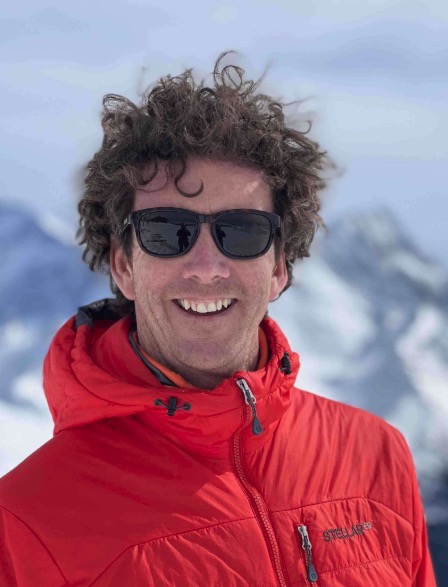
Rik Dyson, Director, Winter Sports Company
Rik has spent his working life between the mountains and the ocean. Superyacht captain, water sports professional, and now Director of Winter Sports Company, sending people off to a winter in the snow every year. He is also the one who picks up the phone when they get there. All of this material comes from 16 years of phone calls, meetings, lift chats, morning coffees, and the odd tall tale in the evening.
Planning a season?
Ask Us Anything, Even If You Never Book
Book a call and we will give you a straight answer, whoever you end up going with.
General information for anyone planning a ski or snowboard season, wherever they are going. Airline allowances, customs rules, entry requirements and electrical standards change, so check the current rules with your airline and the relevant authority before you travel. We have no commercial arrangement with any brand or retailer.





 Emma
 Rik
 Rik
 Emma
 Rob
 Iain
 Cass
 Mike
 Abbie